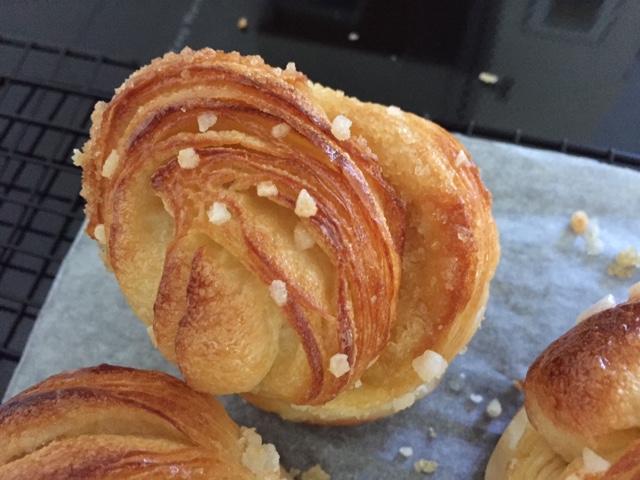
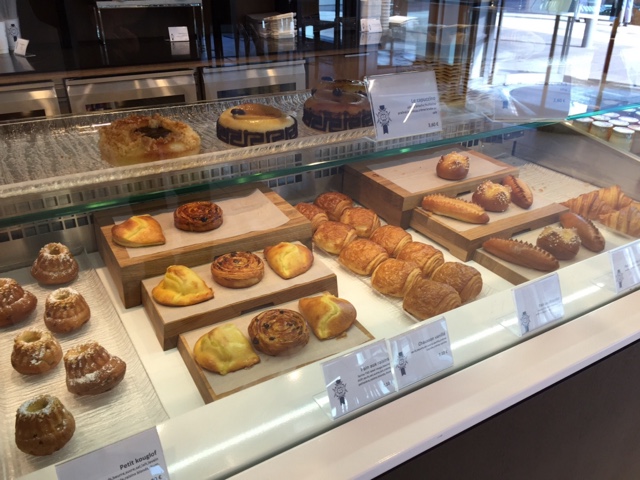
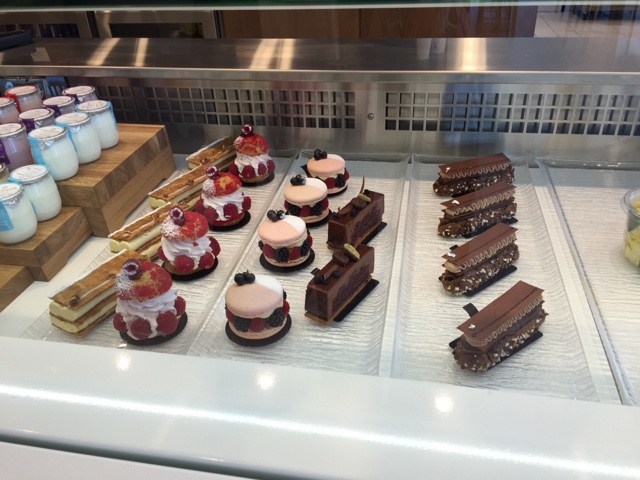
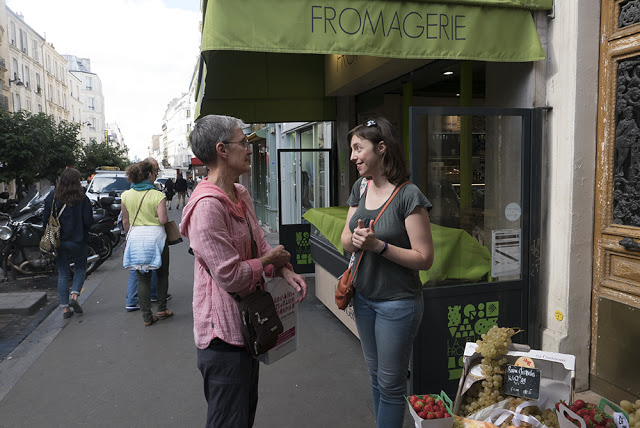
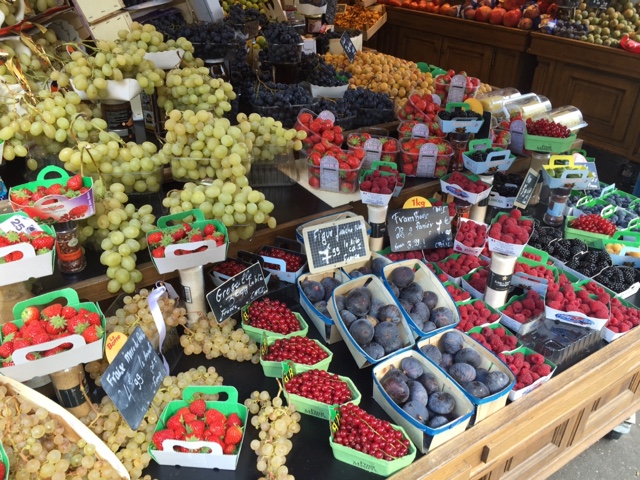
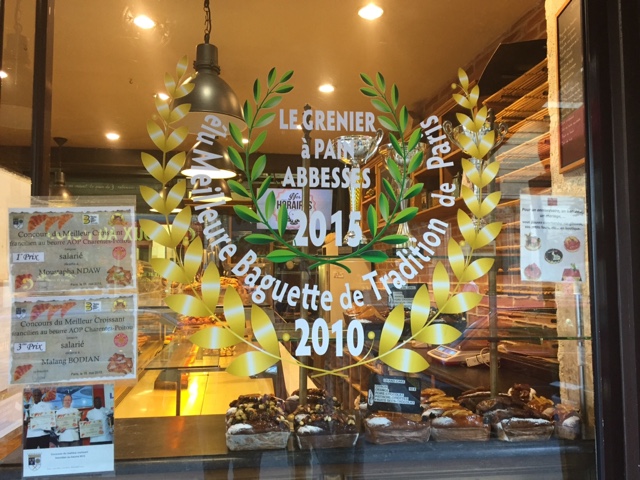
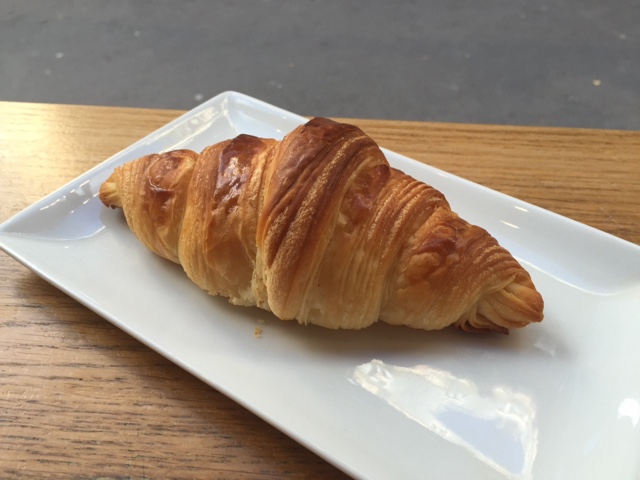
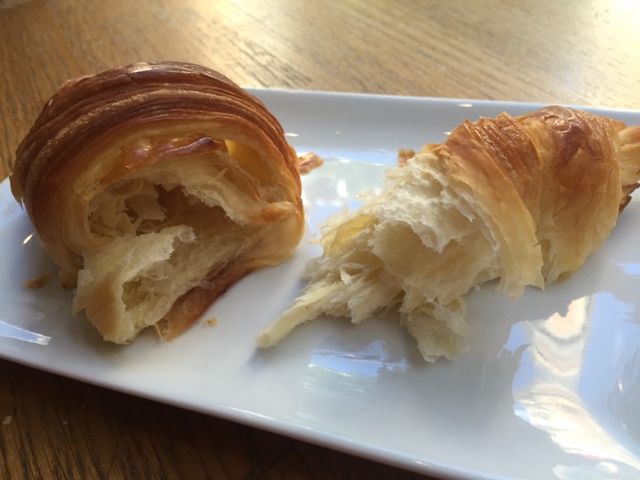
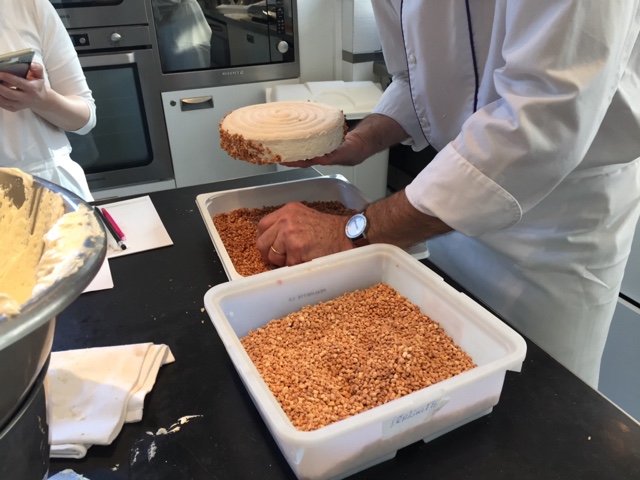
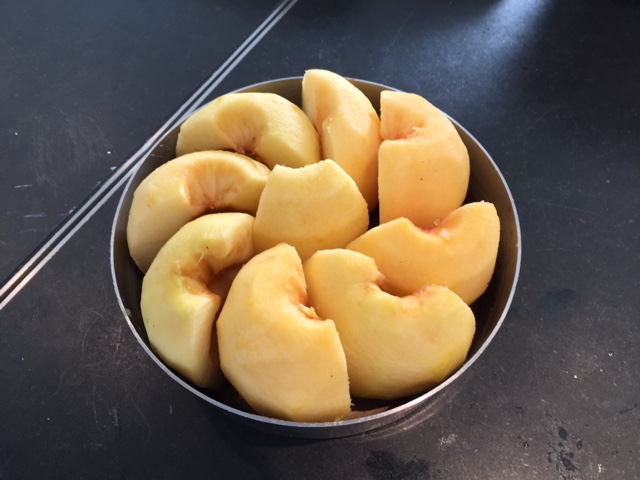
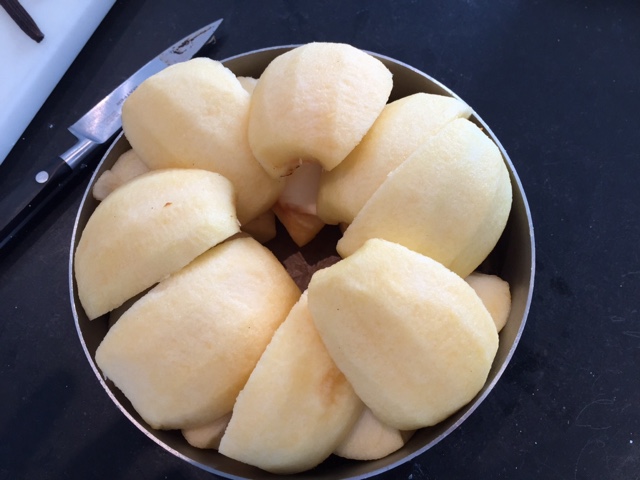
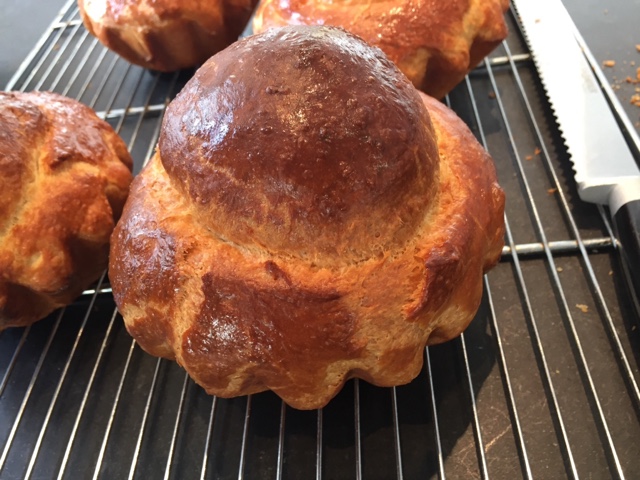
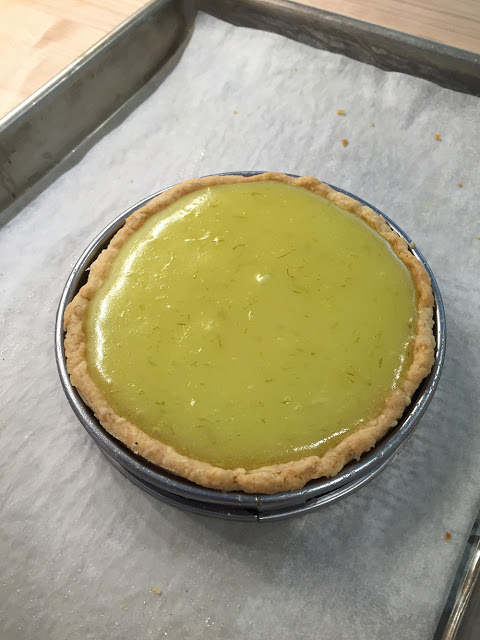
Brioche feuilletée
/Brush the upper edge with a little water, milk or egg wash to help seal the seam once you've rolled it up.
It's all about the journey.
Exciting news!
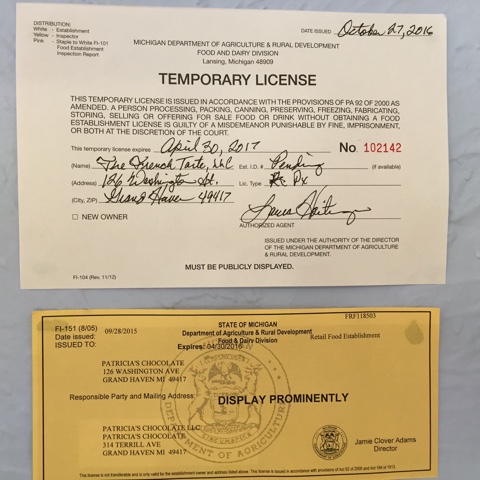
/This past week The French Tarte became licensed to work out of the kitchen at Patricia's Chocolate in Grand Haven, Michigan. Hooray!
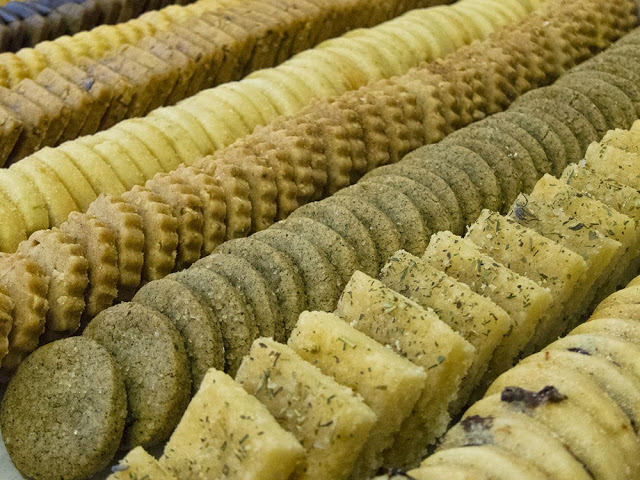
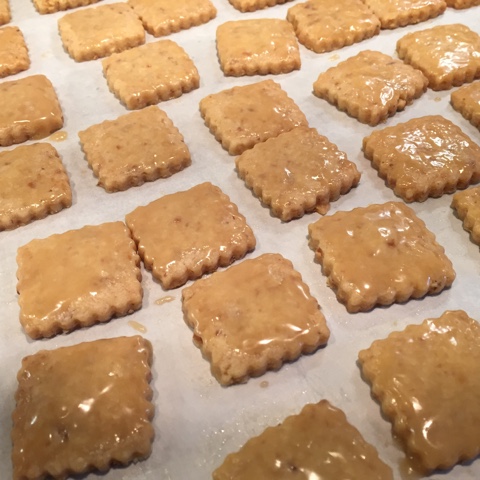
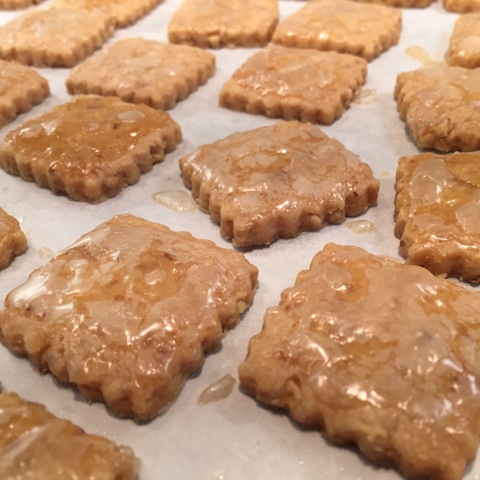
What does this mean you might ask? Well to start out I'll be baking and offering my tasty all butter shortbread in Patty's shop, accepting orders for shortbread gift boxes and developing a schedule of travel from GR to GH to dovetail with my teaching schedule at Sur La Table here in GR.
Shortbread bar
Taking it step by step. In the meantime I wanted to share with you some of things I've been making in recent months.
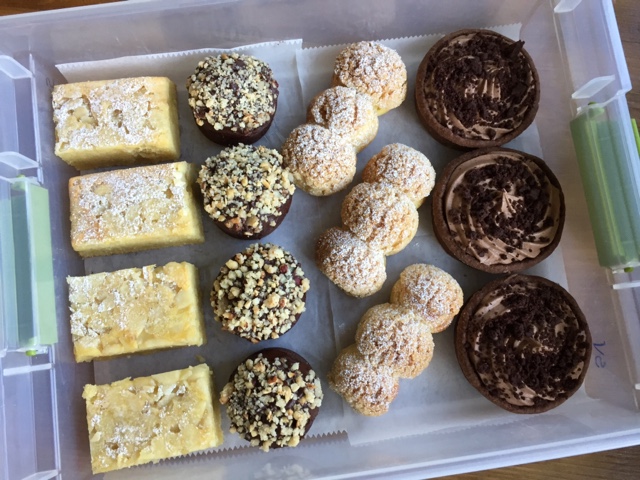
In early August, as I birthday present to myself, I baked an assortment of goodies (from left to right): pavé aux amandes, cocoa hazelnut financiers, bubble eclairs with raspberry currant cream (Yum!) and chocolate milkshake tarts.
By now many of you know my attraction to financiers and tarts. What can I say? I just can't help it!
Once we returned from our trip to France in early October, I've been back in the kitchen doing this and that as well as trying some new shortbread flavors (how about coffee cardamom, oatmeal ginger or coconut lime?!).
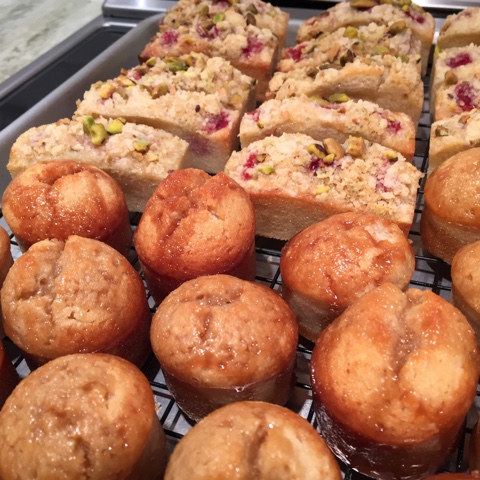
My baking activities often seem to revolve around what I happen to have in the fridge - some of my lightly spiced poached pears being just one example. What better than a batch of financier batter to create pear-caramel and raspberry-pistachio crumble versions for our freezer.
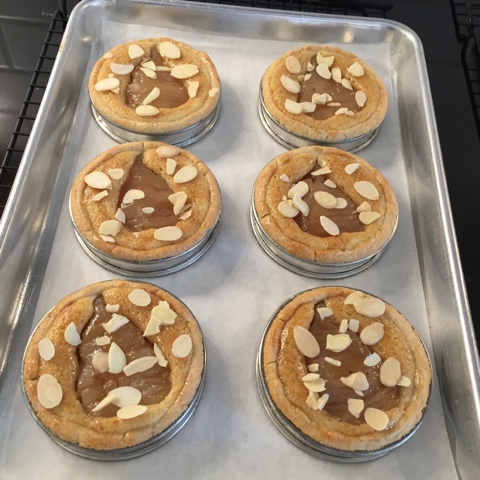
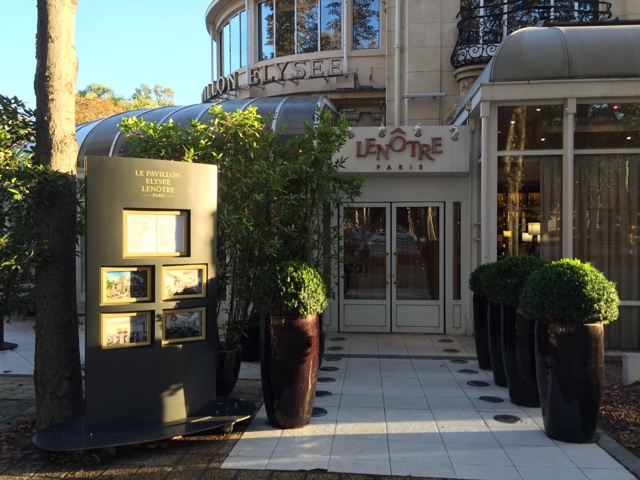
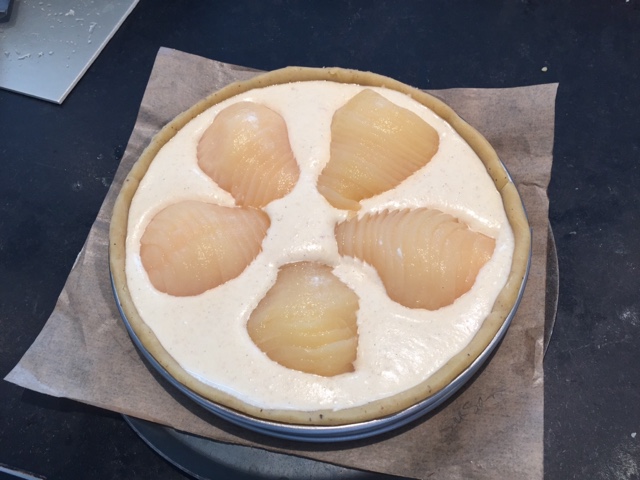
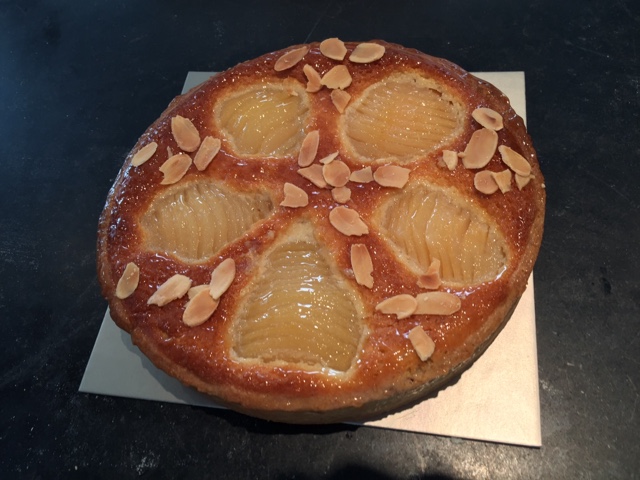
The pears also encouraged me to make some individual versions of tarte bourdaloue using the recipe that I had brought back from Le Notre in Paris.
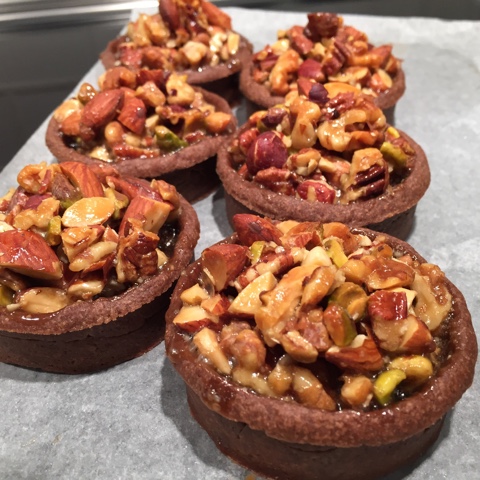
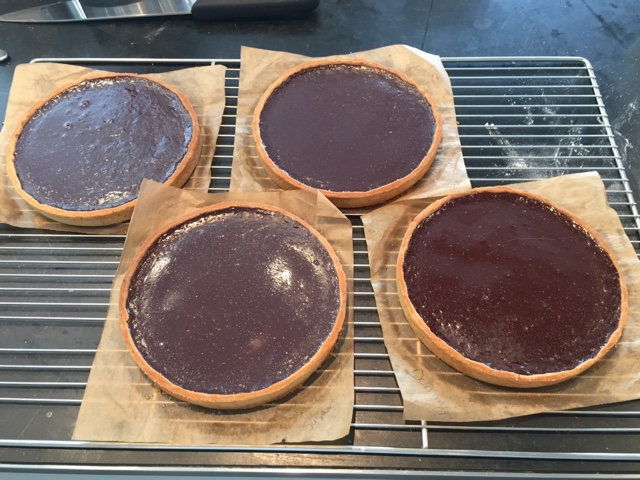
Of course I simply can't forget the household favorite (hint, hint - guess what Steve loves?), the quintessential caramel nut tart. This go around I used some chocolate tart dough that had been waiting in the freezer for that very thing.
Chock full-o-nuts, oh-so-delicious and always a hit.
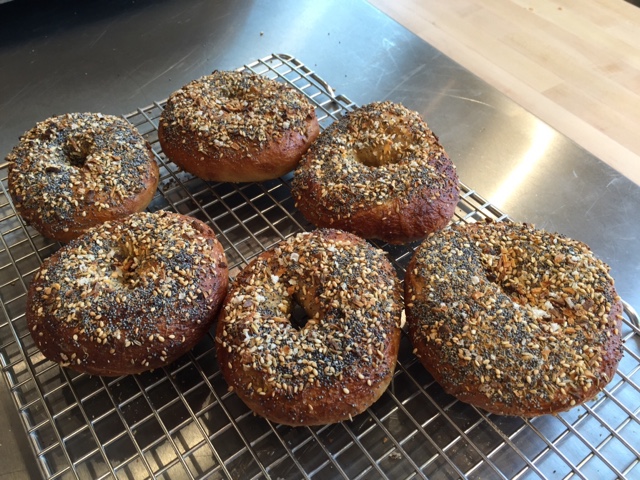
And for something just a little different - bagels! These were from a class I taught at Sur La Table where the results were stupendous. Chewy, not tough, great depth of flavor and definitely a make-again recipe. These are the "everything" version, the deeply browned exterior being due to molasses in the dough as well as some molasses in the bagel boiling water. Yup!
And so the adventures continue. Stay tuned.
Coconut sugar and maple cream - new ingredients on my shelf
/There was really no difference in the flavor - still tasty - so for me it's simply a matter of using an unrefined sugar in place of a refined one. I've been doing this for some time with unrefined raw cane sugar which gives a pleasing crunch to shortbread cookies or as a topping for things like financiers.
Don't be afraid to use your imagination - come up with your own ideas!
Saying goodbye to Paris
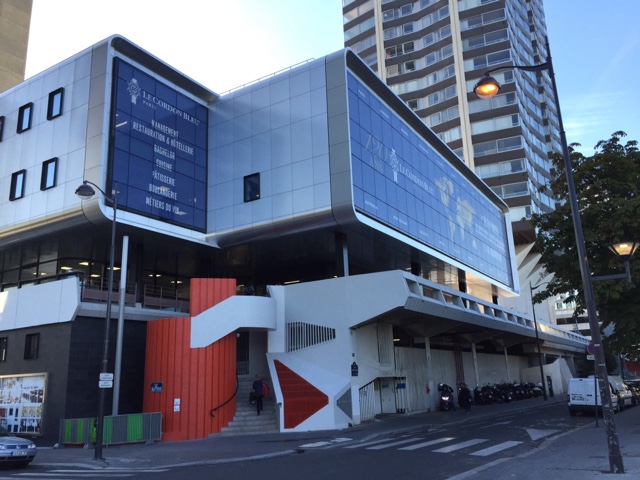
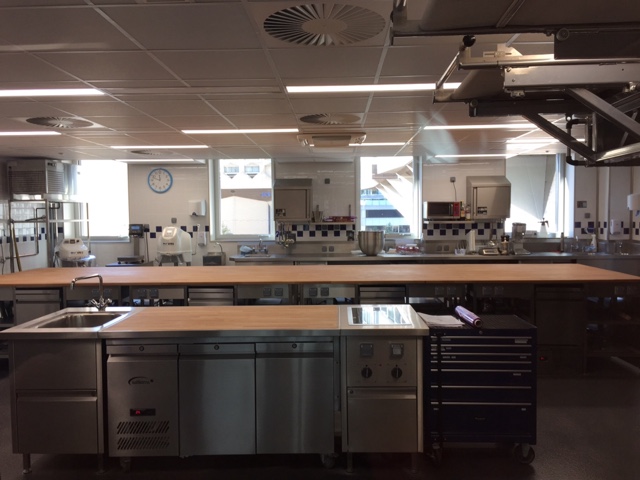
/That morning Steve had a cemetery visit to make and I visited the new LCB Paris. We then connected at metro Sèvres-Babylon and strolled to rue du Cherche-Midi for lunch at Cuisine de Bar. For years I've been enamored of this spot for dejeuner, right next to the Poilâne boulangerie, but this time we were unimpressed. The main server didn't seem able to get his act together, even though this is a small place and it wasn't very busy. Finally we were served our tartines (open face sandwiches) made with Poilâne bread and, in our case, topped with a curry chicken. It was tasty I must admit, but the place has lost it's appeal, and I suspect we won't go back again.
A visit to the new Le Cordon Bleu in Paris
/![]() |
| Lady Liberty |
A walking tour of Montmartre with Clotilde Dusoulier
/Succès class at Le Nôtre
/Les Tartes class at Le Nôtre
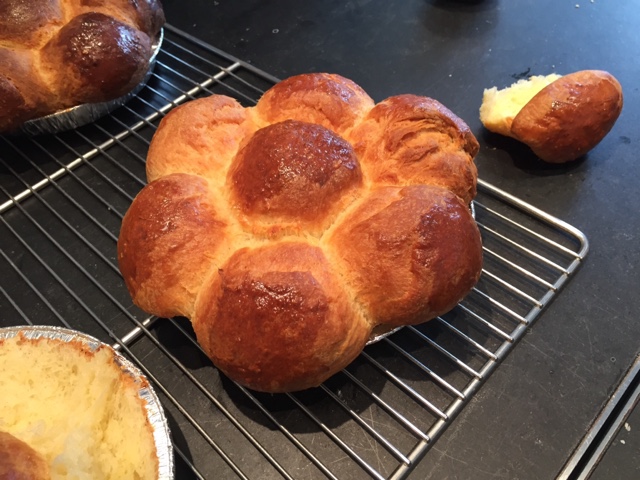
/Brioche class at Le Nôtre Paris
/and is invited inside by pleasant staff ready to serve you coffee, water or whatever.
Pretty tasty too!
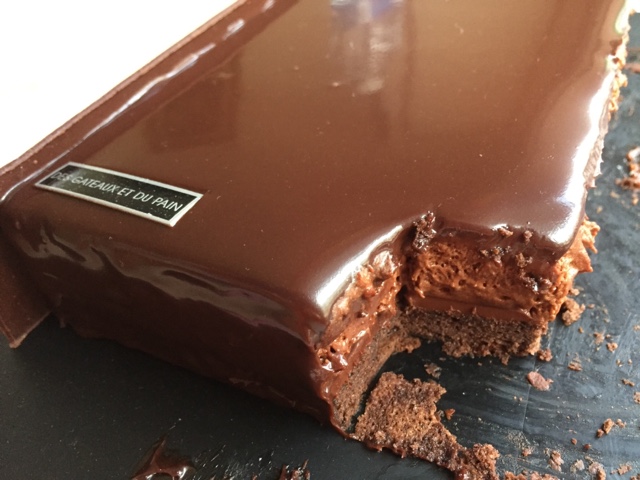
Gateau au chocolats from Des Gateaux et du Pain
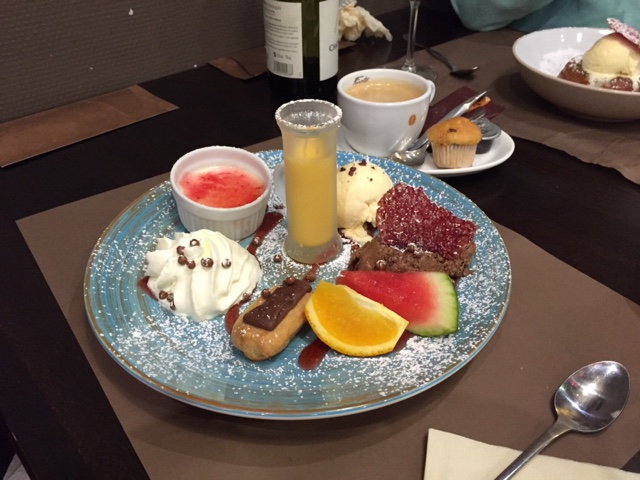
/Café gourmand
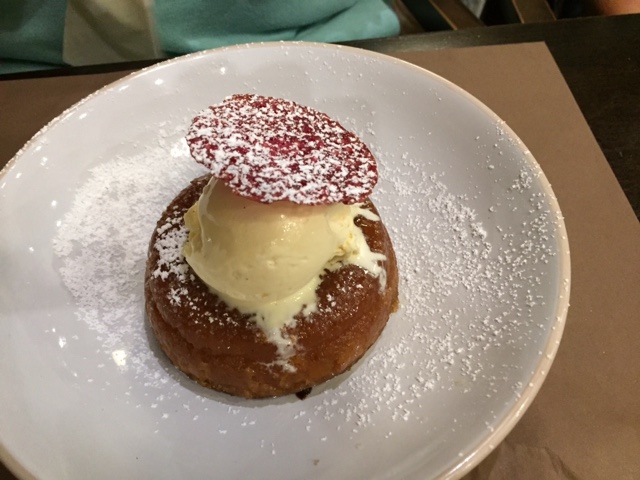
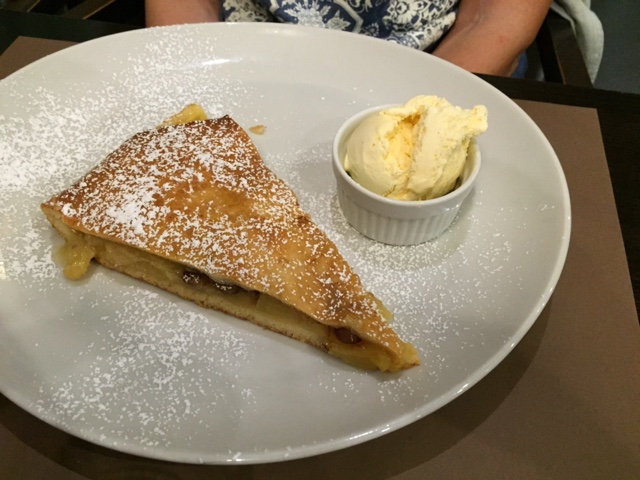
/Richard's wife Pauline had the house version of apple pie which was more like a thick crepe filled with apples and raisins with vanilla ice cream on the side.
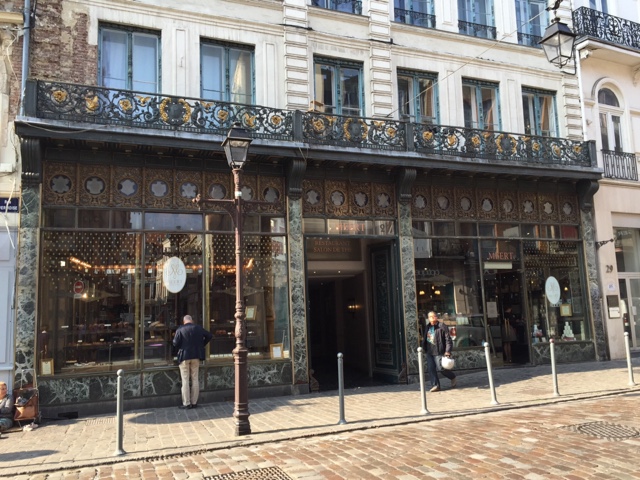
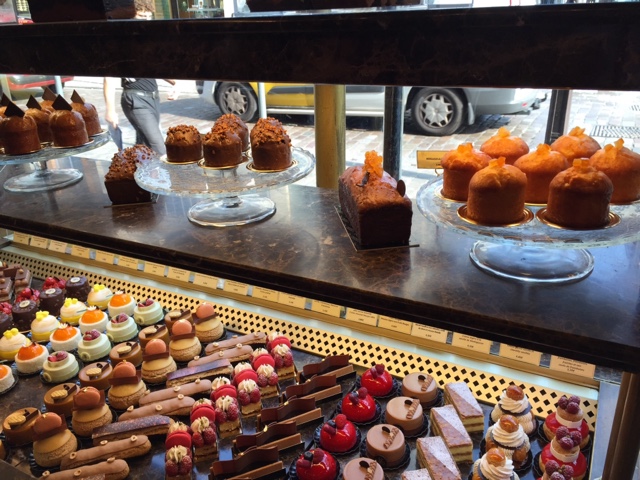
Méert pastry shop in Lille
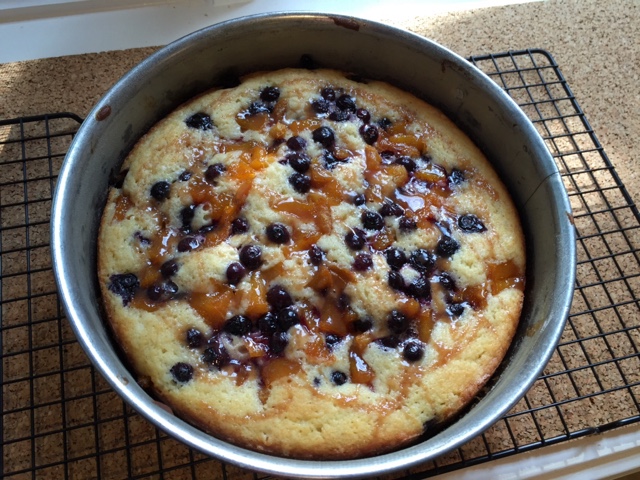
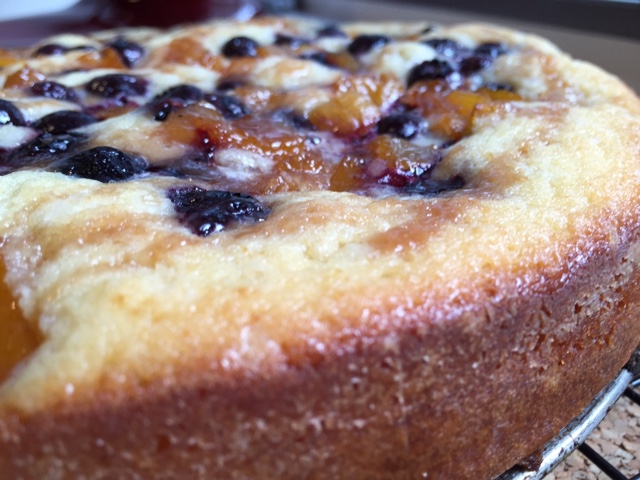
/Peach blueberry buttermilk cake
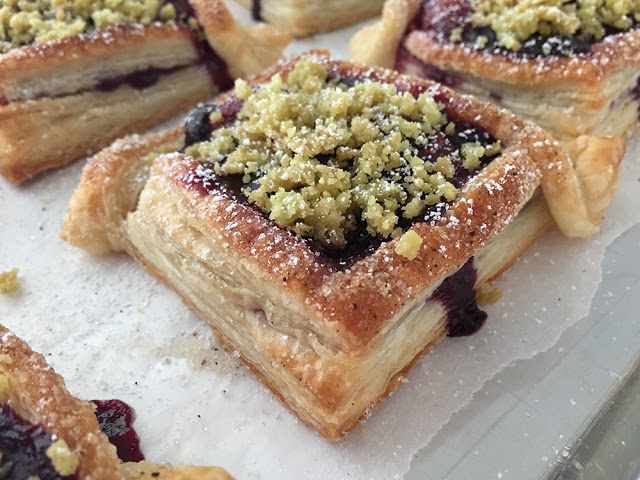
/Cherry-berry feuilleté and peach buttermilk ice cream
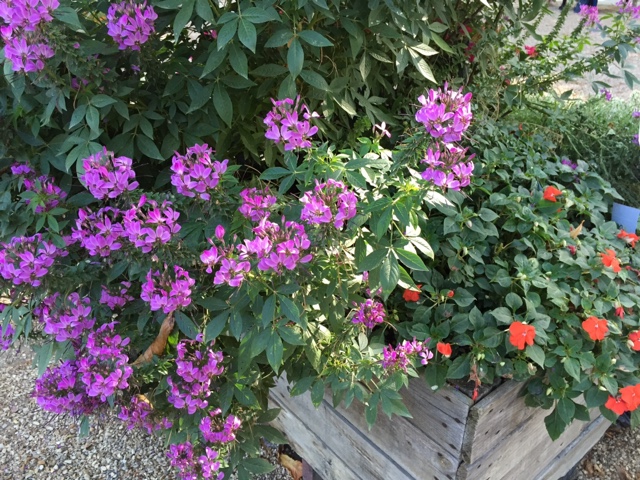
/The summer annuals are showing off their colors here in Grand Rapids MI . . . .
| lovely coleus in our little garden courtyard |
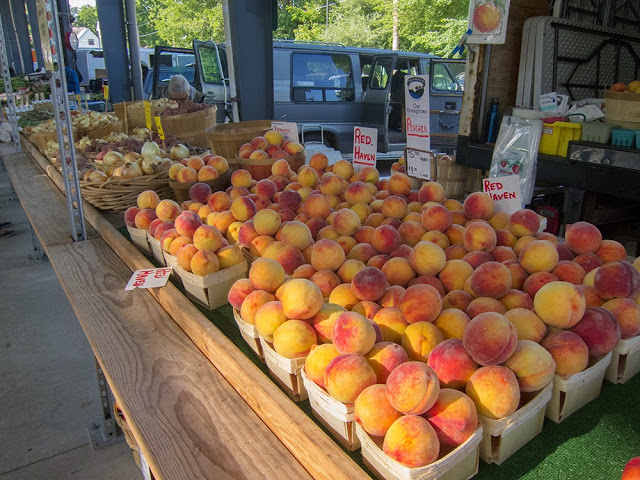
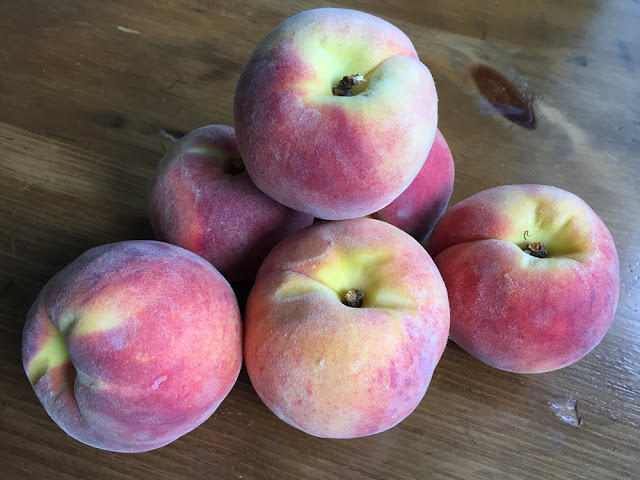
and the summer peaches are out in full force!
Fresh Michigan peaches are one of my favorite fruits. So of course I've been thinking of the many wonderful ways to use them. This time I was inspired by a peach buttermilk ice cream recipe from "Food and Wine" magazine.
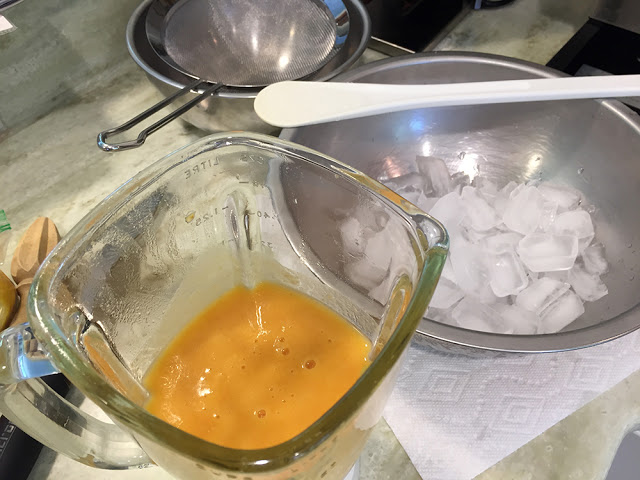
I followed the recipe for my usual ice cream base (2 cups heavy cream, 1 cup whole milk, 3/4 cup sugar, 5 large egg yolks, pinch of salt) replacing the cup of whole milk with buttermilk. I blanched 1.5 pounds of peaches, then peeled, pitted, sliced and blender-ized them with a squeeze of lemon juice, folding the purée into the cooled base.
| peach purée at the ready |
| ice cream base finishing its chill down |
I usually chill my base in the fridge for a day or two, then process in my ice cream maker and transfer to a freezer container several hours before serving.
I also wanted to use some cherries and blueberries I had on hand to complement the peach ice cream in a dessert I was planning for a family meal. And, to top it off, there was some reverse puff pastry in my freezer just waiting to be made into something oh-so-delicious.
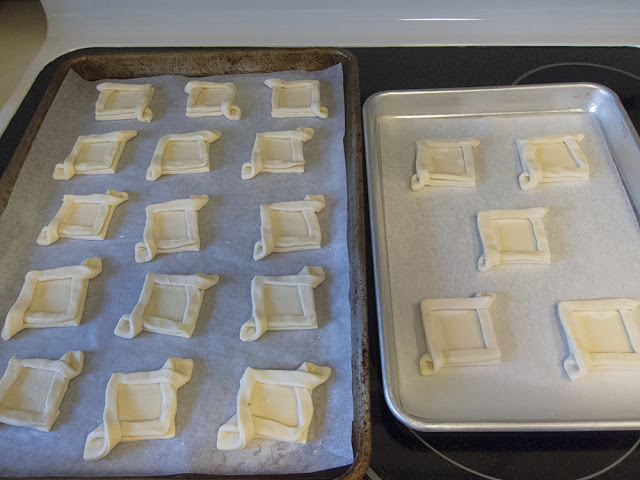
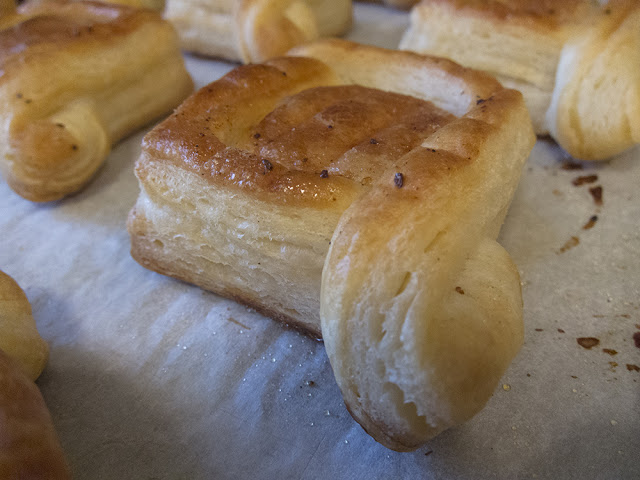
The beauty of the feuilleté preparation is that I can roll, shape and bake them ahead of time and hold them either at room temperature if using the same day, or in the freezer for a number of days if planning a bit farther ahead.
When ready to fill them, I simply push down the center layers of puff to make room for the fruit mixture that will be mounded in the feuilleté.
I mixed 4 cups of fruit (cherry/blueberry combo) with a teaspoon of fresh lemon juice, 3-4 tablespoons granulated sugar (I like my fruit on the tart side) and 1 tablespoon cornstarch. I then cooked this concoction on med-low heat until bubbly and thickened.
Note: this quantity of fruit filling was enough for 7-8 feuilletés about 3.5 inches square.
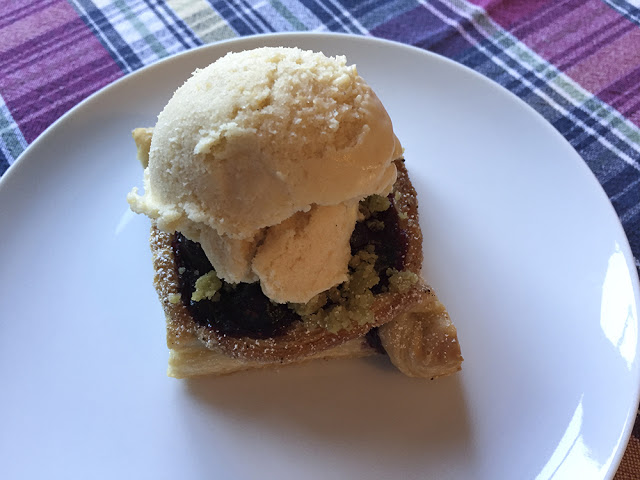
Then I scooped a mound of filling in the center of each feuilleté and baked at 350ºF for about 10-15 minutes. Since the puff pastry is already baked and the filling already cooked, it's really just a matter of heating everything up.
| the end result! |
I know I've mentioned crumble before in this blog. It's a great thing to have on hand and is so easy to make. Make as much or as little as you'd like.
Simply mix equal weights flour and sugar in a medium bowl, sand in the same weight of cool, diced butter to form coarse crumbs. In this case I added some matcha powder with the flour and sugar (you don't need much).
Spread the crumbs out on a parchment lined sheet pan and bake at 325ºF, stirring and breaking up clumps every 5 minutes or so until lightly browned and crisp, 10-15 minutes total. Let cool.
Store in a zip-top bag in the freezer and use at will!
| Mmmmmm! |
While the ice cream was a bit more icy in texture than I had hoped (I suspect due to using low fat buttermilk rather than whole milk, plus the water content of the fruit purée), the contrast of the tangy peachy coolness with the tart cherry-berry filling and buttery, flakey puff was oh-so-good indeed.
Three cheers for summer fruits! Hip hip hooray . . . .
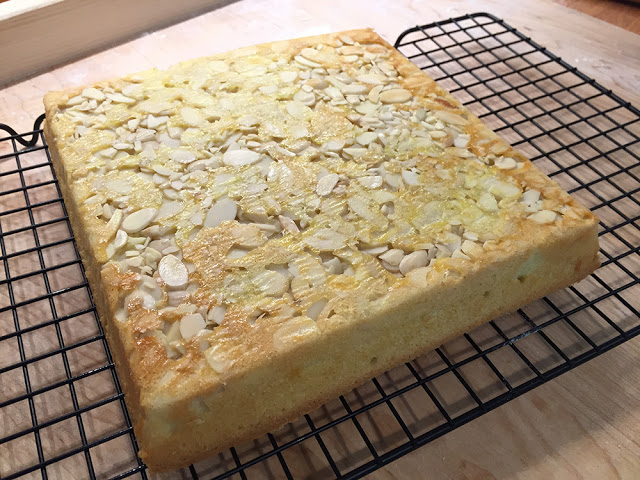
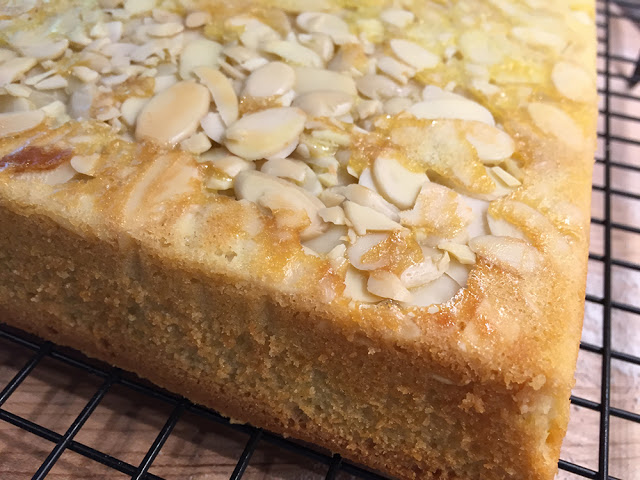
Pavé aux amandes
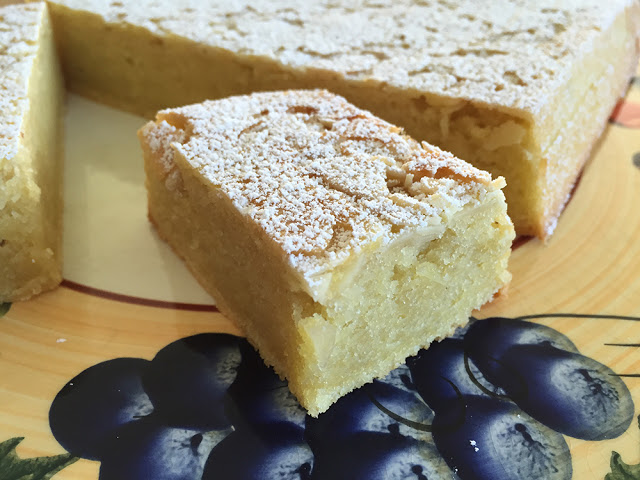
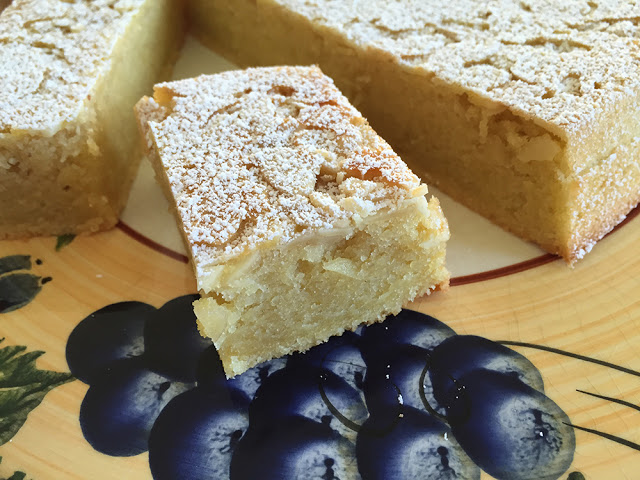
/Periodically looking back at some of the classic recipes from pastry school, I recently decided to make a classic French pavé aux amandes, a moist, dense-but-not-heavy almond cake.
I think of this as one of the many treats that kids might enjoy for le gouter, the traditional afternoon snack time in France, usually around 4 pm. And of course adults wouldn't mind it either with a nice cup of coffee or tea.
Top it with a delicious whipped mascarpone cream and some fresh seasonal fruit and you have yourself a tasty dessert!
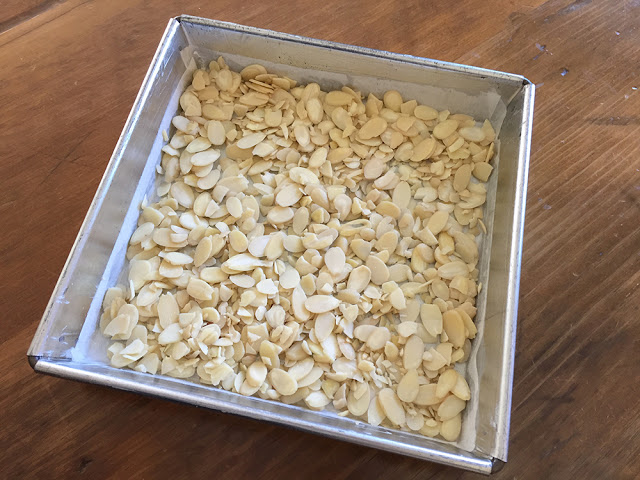
It's a simple and straight forward recipe, baked in a 9" square shallow pan lined with parchment, buttered, then sliced almonds layered on the bottom.
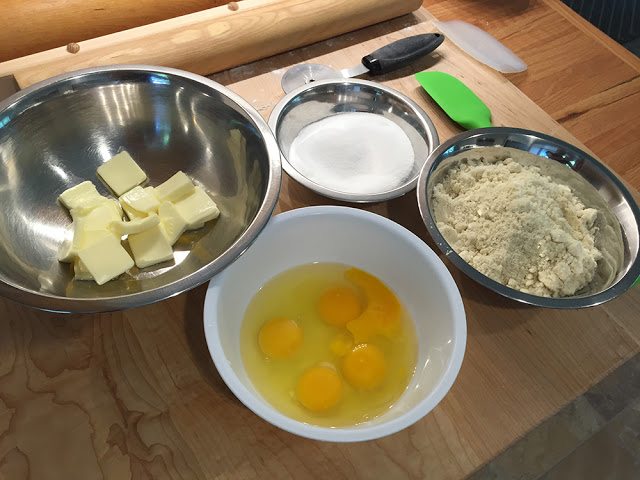
| les ingredients |
Cream 125 gram softened butter with 200 grams sugar until blended. I do this in a medium bowl with a spatula, but you can also use a stand mixer with the paddle - just don't cream too long since you really don't want to aerate this batter. It's meant to be a dense cake.
Then blend in 250 grams egg (about 5 whole eggs) followed by 250 grams blanched almond flour.
Note: for a bit of variation add some orange zest and a splash of vanilla and/or almond extract to punch up the flavor. Yum.
And that's it! How easy is that, eh??
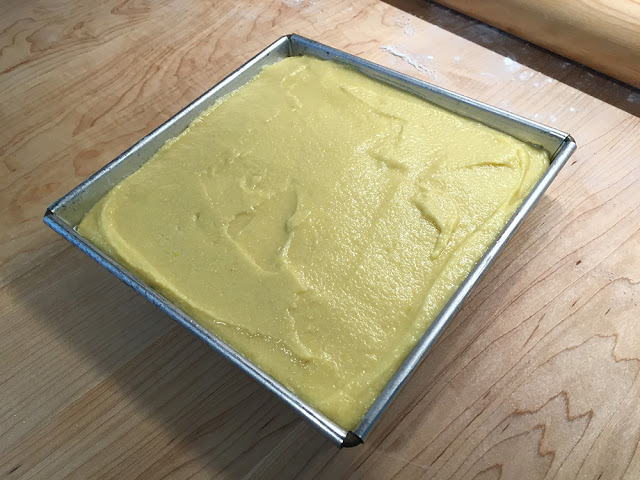
The trickiest part of this whole thing is transferring the batter to the prepared pan. Do it carefully - I place blobs of batter over sections of the pan, then gently spread so as not to dislodge the almonds on the bottom.
| evenly spread and ready for the oven |
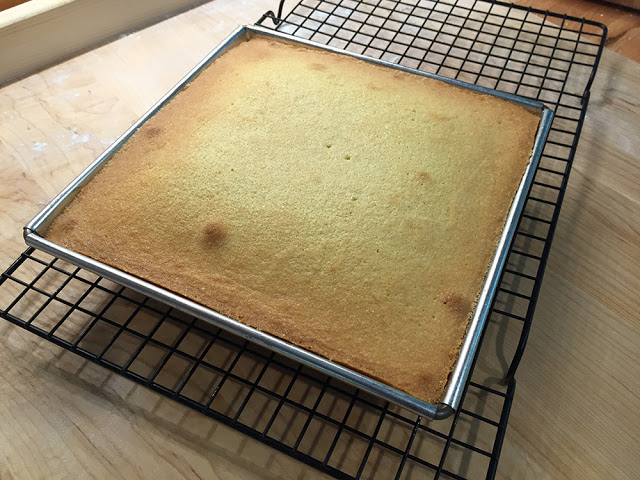
Bake at 325ºF for about 45 minutes until the top is golden brown, there is no jiggling in the center and it feels firm to touch. You'll see a few moist crumbs if checking with a skewer or cake tester.
Carefully run a knife around the edges of the cake and turn it out onto a cooling rack.
Once cooled, dust the top with powdered sugar and dig in!
The flavor is subtly almond, the texture is dense yet light and the crumb oh-so-moist.
And guess what - Steve liked it!! Yay!!!
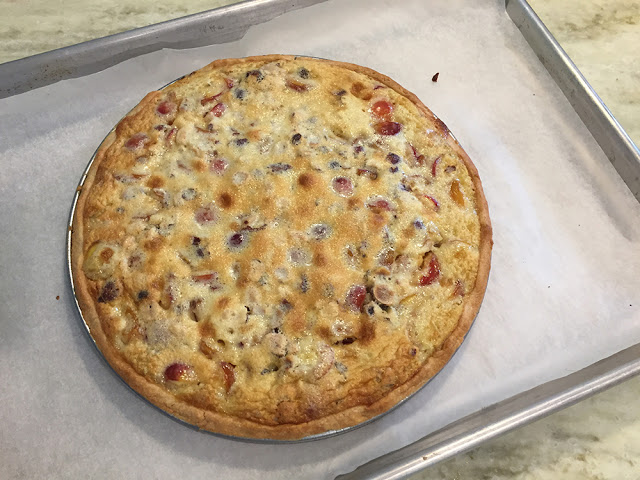
Cherry hazelnut clafoutis tart
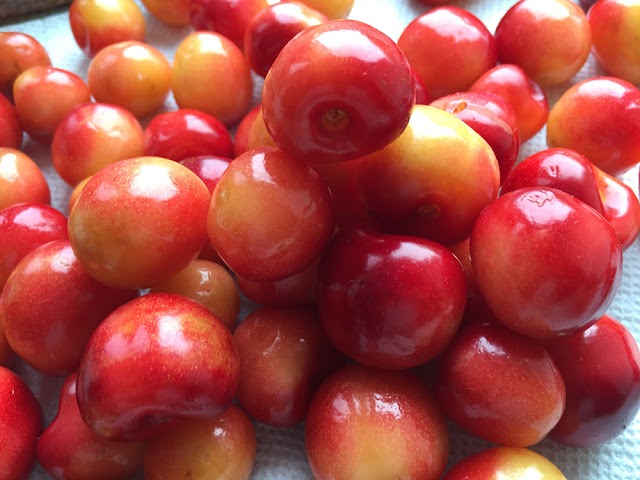
/As the season continues and other stone fruits and blueberries are starting to show their faces, I just had to make something using Michigan cherries before they're no longer available.
We were slated to attend a Bastille Day celebration put on by the GR chapter of L'Alliance Française, and I had promised to bring a dessert. Cherry clafoutis came to mind, this time as a tart.
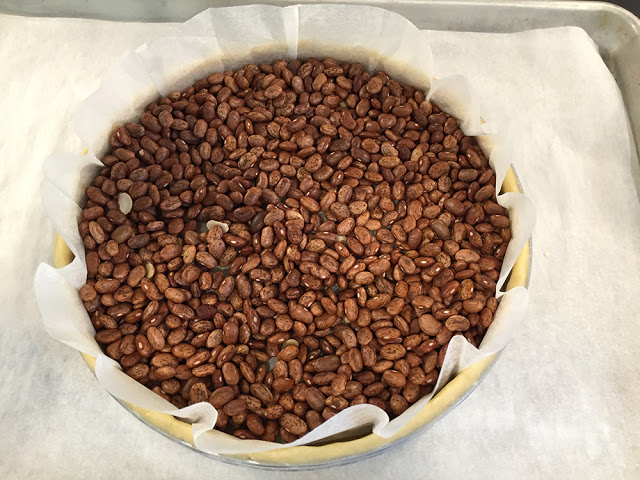
I lined a 240 mm tart ring with a standard pâte sucrée and blind baked it first.
| going into the oven |
The filling is very straight forward.
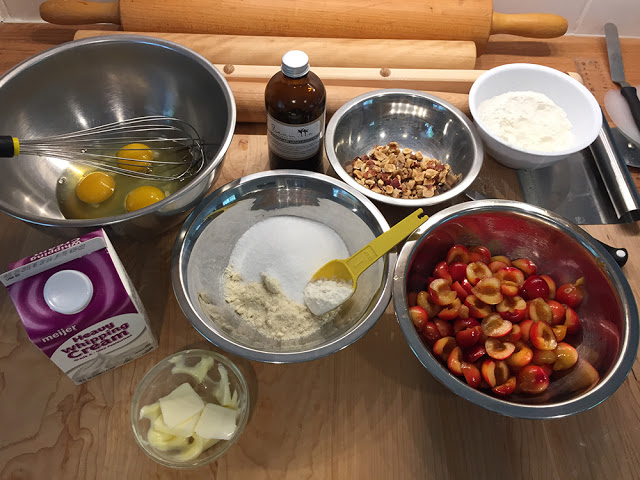
| les ingredients |
Place 3 large eggs into a bowl; whisk in 100 grams sugar, 25 grams almond flour, 150 ml heavy cream, 25 grams melted butter, 1/2 tablespoon vanilla extract, 1/2 tablespoon flour and 30 grams hazelnuts (coarsely chopped).
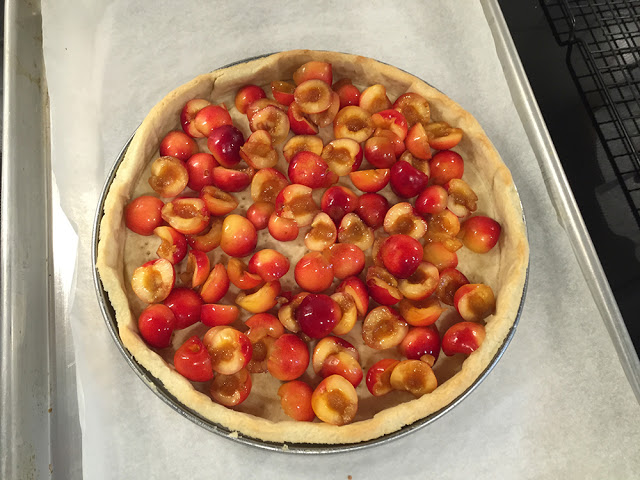
Place 300 grams pitted and halved cherries into the blind baked shell . . .
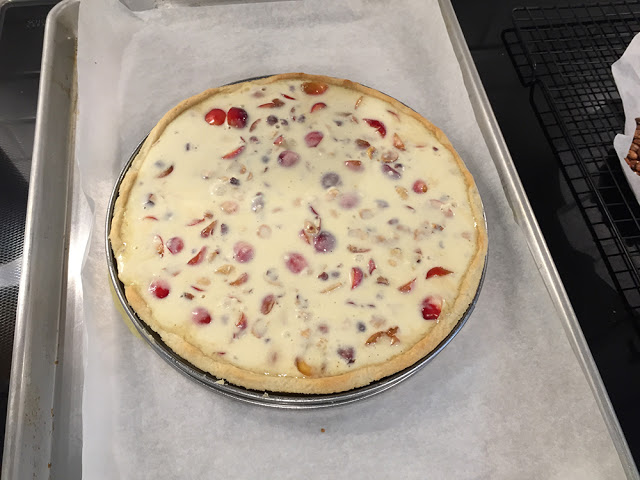
pour the egg/cream mixture over them . . . .
and bake at 350ºF for 30-40 minutes until the filling is set.
| et voilà! |
For serving I topped the tart with a hazelnut crumble which I had baked ahead of time and had in my freezer.
FYI: a basic crumble is equal weights flour, sugar and cold, diced butter - make as much as your heart desires.
Add in the same weight of your favorite chopped nut (or less as you see fit) and you have a delicious crunchy topping to complement your tart.
Or add in some citrus zest and your choice of spice like cinnamon, coriander, cardamom or nutmeg - you get the idea.
Baked or unbaked, you can freeze it to have on hand for lots of things.
Happy July 4th!!!
/It's a beautiful day here in West Michigan and Steve and I look forward to celebrating the holiday this afternoon at Clear Lake with the extended TenHave clan.
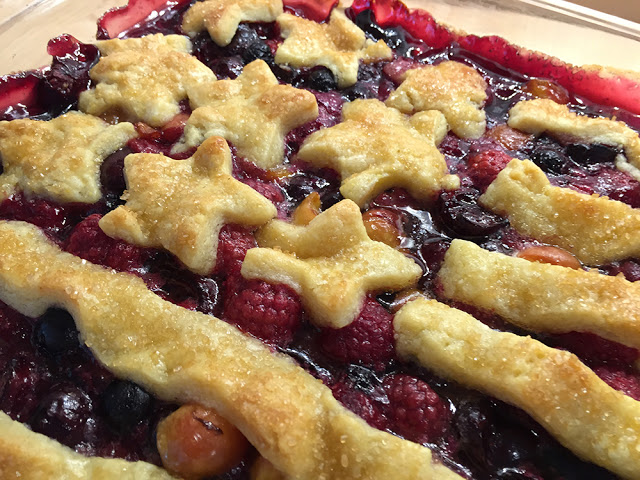
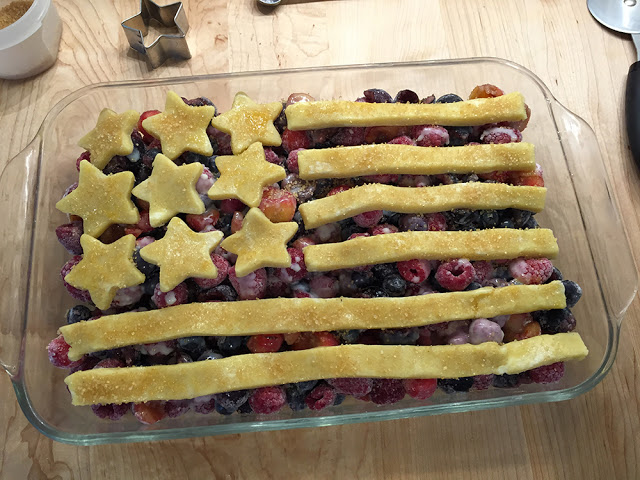
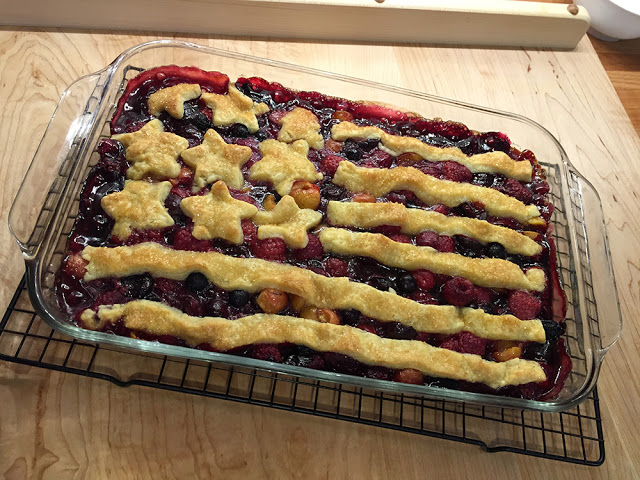
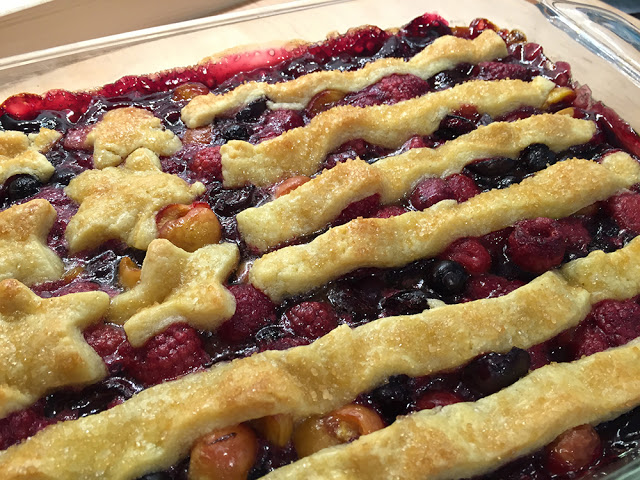
Cherry-berry cobbler is on the dessert menu.
I'll give you a quick narrative (hmmm - do I ever do anything quickly in this blog?) of the recipe, my take on a peach blackberry cobbler from Emily Luchetti's book "Four-Star Desserts".
And since this is, after all, a classic American holiday, I'm giving you the ingredients in traditional American measures.
The cobbler topping is a delectable cornmeal dough made by combining 3/4 cup all purpose flour, 1/4 cup cornmeal (I used fine yellow), 2 tablespoons granulated sugar and a pinch of salt.
Sand in one stick (4 oz) cool, diced butter to coarse crumbs, toss in 1-2 tablespoons ice water and mix just until it comes together. Easy-peasy!!
Roll the dough out between sheets of parchment or plastic wrap to a thickness of about 1/4 inch then chill in the fridge.
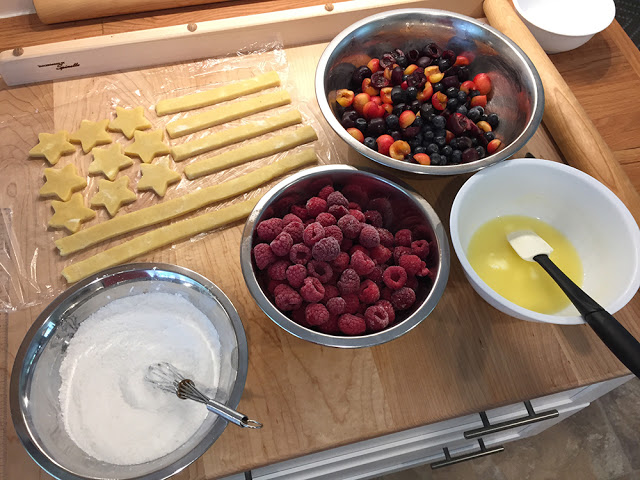
Cut desired shapes (I opted for a stars and stripes motif bien sûr) and hold them in the fridge or freezer until ready to use.
Heat your oven to 350ºF.
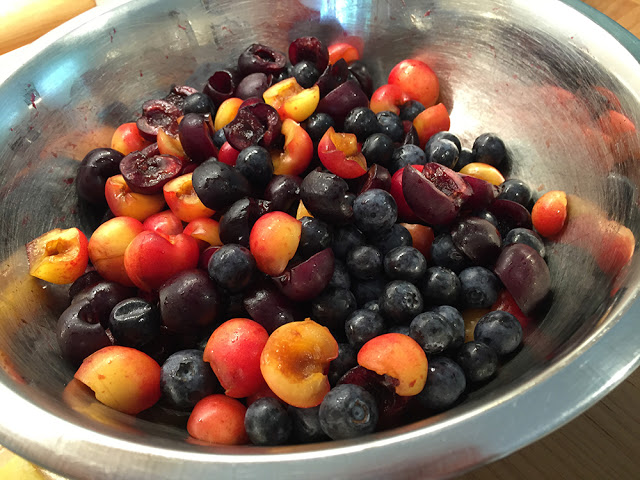
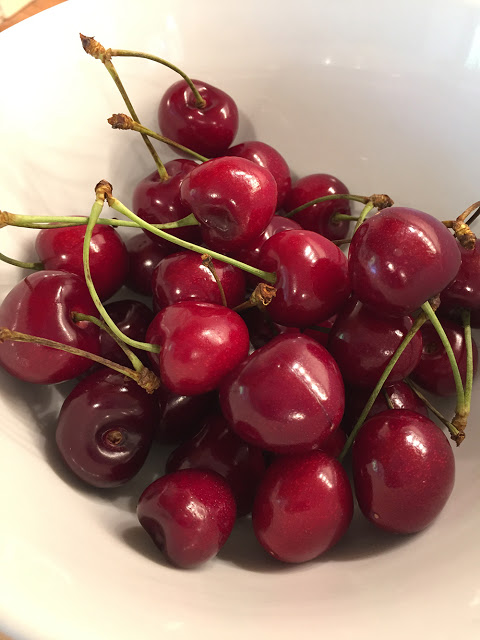
For a 9x13 clear Pyrex dish I prepped about 8 cups of fruit, about half of which was a combo of Rainier and dark sweet cherries that I had purchased at the Fulton Farmer's market. Blueberries and raspberries filled out the mix.
Toss the fruit with a mixture of 1/2- 3/4 cup granulated sugar (see NOTE), 4 tablespoons cornstarch, a large pinch of salt and a half dozen or so grates of fresh nutmeg. I also added about 1/4 teaspoon ground coriander. Squeeze a bit of lemon juice in to help brighten the taste of the fruit.
NOTE: when adding sugar, consider the natural sweetness or tartness of the fruit you are using; start your sugar addition on the lower end of the scale and add as needed to taste.
As you can see above, I have my dough cut and ready to go.
Place the fruit mixture in the Pyrex dish, drizzle 6 tablespoons melted butter over it and top with the dough shapes.
Egg wash the dough and sprinkle with sugar. I like raw sugar - it gives the finished product a nice crunch.
| ready for the oven |
Bake at 350ºF for about 40-45 minutes until the topping is golden brown and the fruit filling is bubbling.
| et voilà! |
You can be sure we'll be enjoying this later in the day with some vanilla ice cream, oh yeah.
And a Happy July 4th to all!!
Michigan cherry charlotte
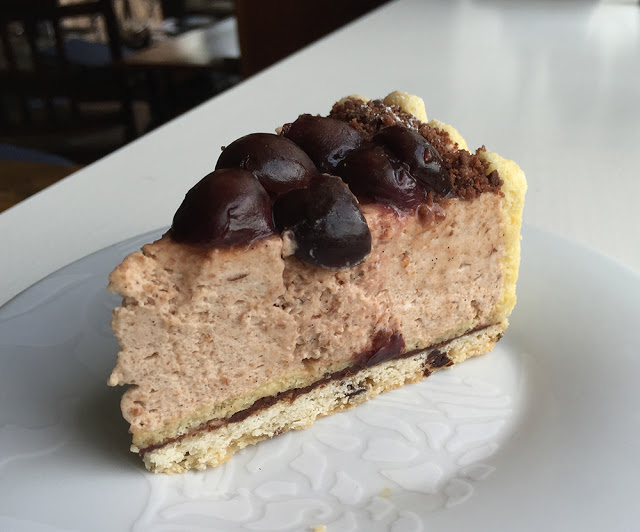
/There are so many delicious things to make with sweet cherries, and, since I had some petite lady fingers in my freezer, my mind turned toward a cherry version of a classic charlotte.
A charlotte is a dessert assembled in a mold lined with lady fingers, sponge cake or bread and then filled with a fruit mousse, Bavarian cream, whipped cream or custard.
I remember making a pear version in pastry school and recall it was quite tasty indeed. I don't believe I've made one since.
It was time.
First a brief note about lady fingers. They belong in the category of sponge cake and are really quite straight forward to make.
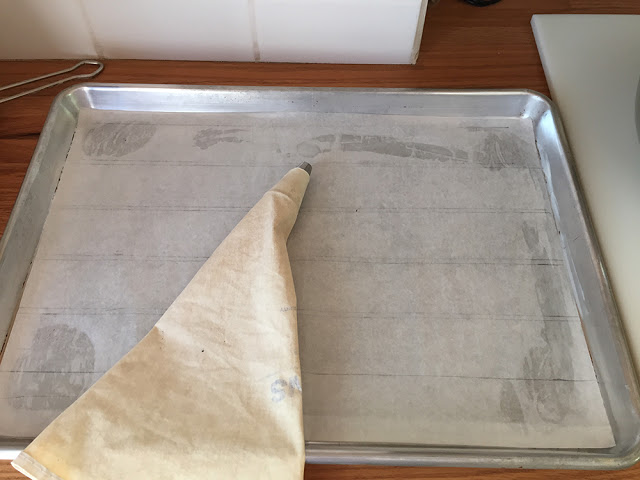
To prepare for piping the lady fingers I marked a half sheet pan in 3 inch wide increments as a guide for my piping. You can make your lady fingers any size your little heart desires!
The base recipe we used at Le Cordon Bleu calls for 4 eggs, separated; 125 grams sugar and 125 grams all purpose flour.
The egg whites are whipped to medium stiff peaks along with half the sugar. The yolks are then whisked with the other half of the sugar until pale and thickened and are folded into the beaten whites.
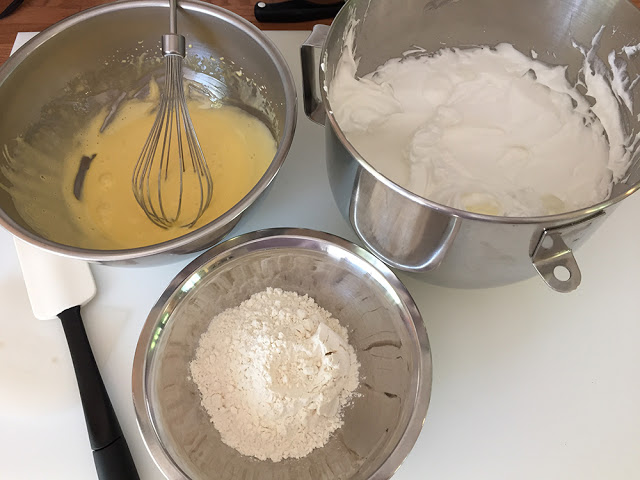
| beaten yolks and whites plus flour ready to be added |
Then half the flour is gently folded into the egg mixture, followed by the second half of the flour just until blended. Don't overwork it.
| all folded and ready to pipe |
Pipe the batter in rows . . . . .
| ready for the oven |
I had served some of the lady fingers sandwiched with lemon curd and strawberry jam at a recent demo presentation, but the rest went into the freezer (they freeze very well!) just waiting to be incorporated into a luscious, creamy charlotte.
I used a 16 centimeter round ring mold for my charlotte assembly and opted to bake a round of tart cherry shortbread as my base.
| ready for the oven |
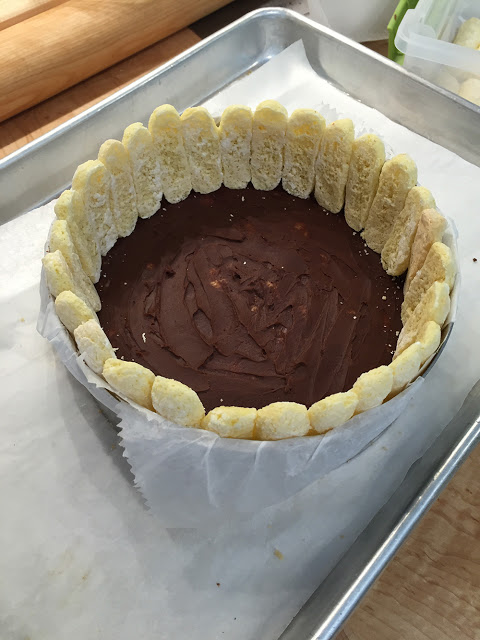
Once the shortbread base was baked and cooled, I lined the ring rather rustically with waxed paper sheets, put the shortbread base in and coated it with a brushing of chocolate ganache. This was meant to protect it from the soon-to-come cherry mousse filling and keep it crisp.
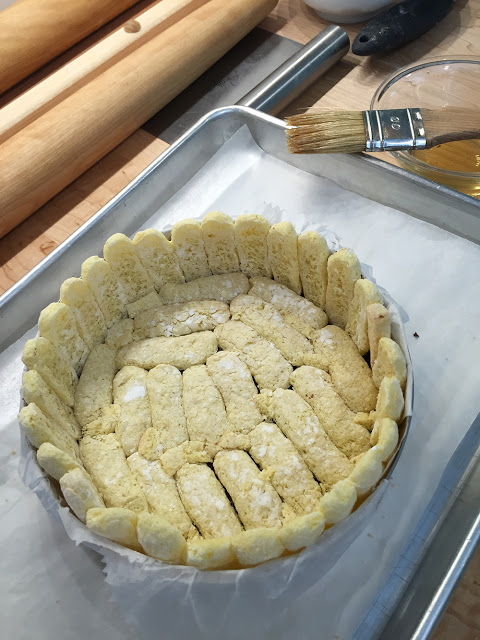
I then lined the ring sides and base with the lady fingers and imbibed them with vanilla simple syrup.
I wasn't quite ready to make my cherry mousse so I popped the assemblage into the freezer to await the final stages.
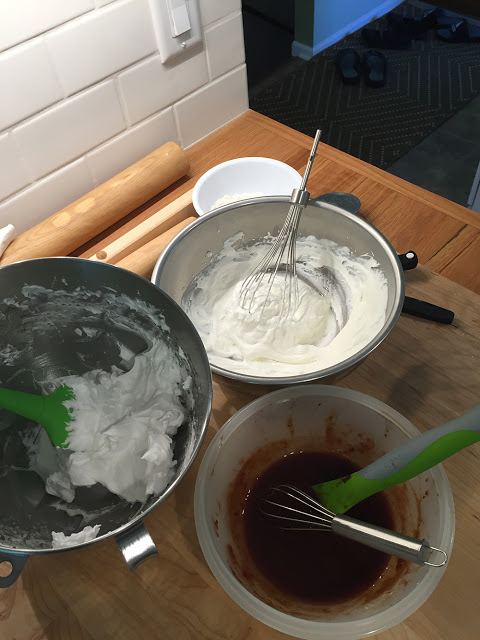
For the mousse I needed cherry purée, whipped cream and Italian meringue (boy, I haven't made THAT in forever!!).
I puréed 130 grams of pitted and halved cherries with about a tablespoon of sugar, a generous squeeze of lemon juice and a couple of teaspoons of water.
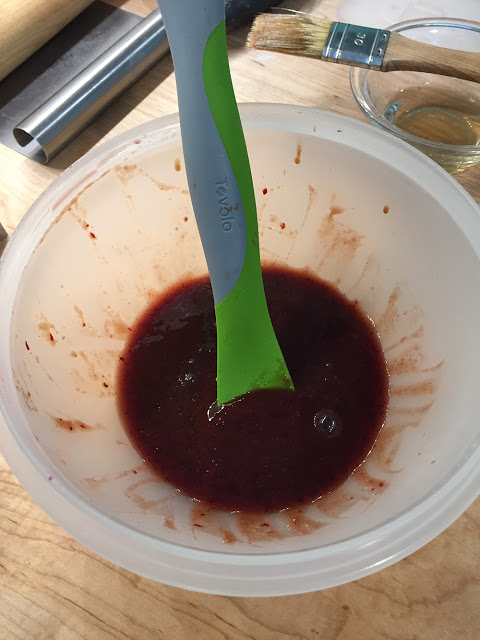
| yup - looks like a purée |
I made a small batch of Italian meringue by cooking 50 grams sugar and 20 ml water to 118ºC . . . .
then pouring the sugar syrup over one whipped egg white and whipping until cooled and nicely shiny and stiff.
(Note to self - plan ahead for various uses and make a larger batch of Italian meringue next time!)
Then I whipped 150 ml heavy cream to soft peaks.
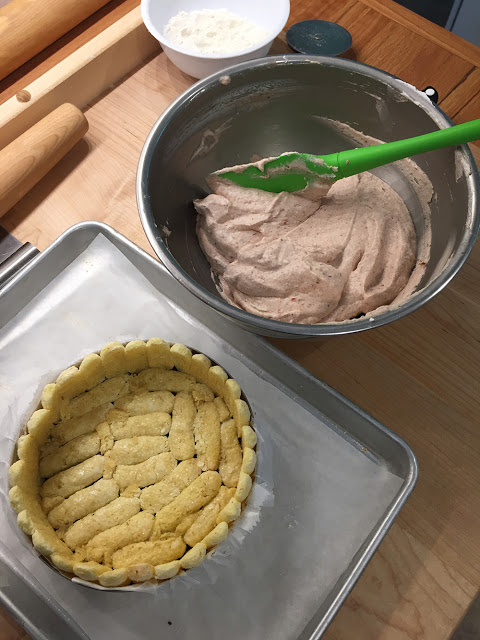
Below are all three components ready to be blended.
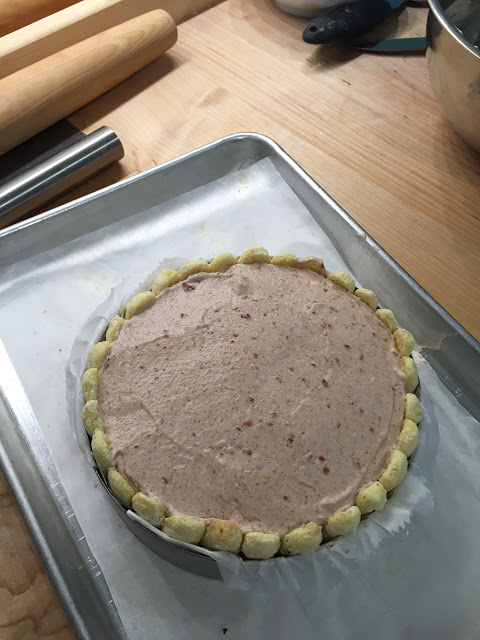
Once the mousse was blended I filled my lady finger lined charlotte ring and smoothed the top.
I placed the charlotte into the freezer to set.
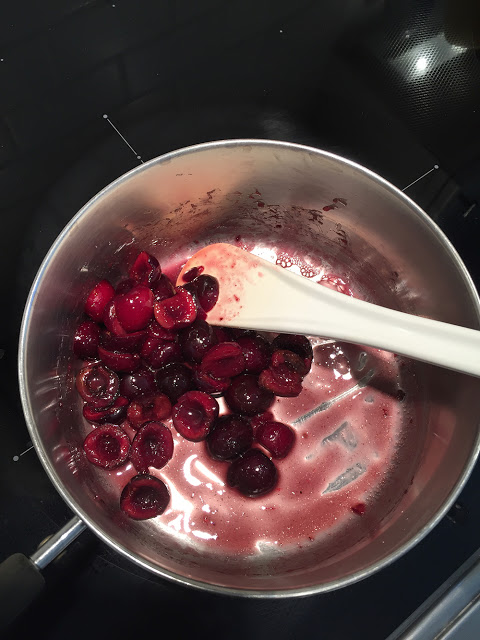
For my garnish I used 120 grams of pitted and halved cherries, cooked them with a little sugar, cornstarch and lemon juice until thickened, then let them cool.
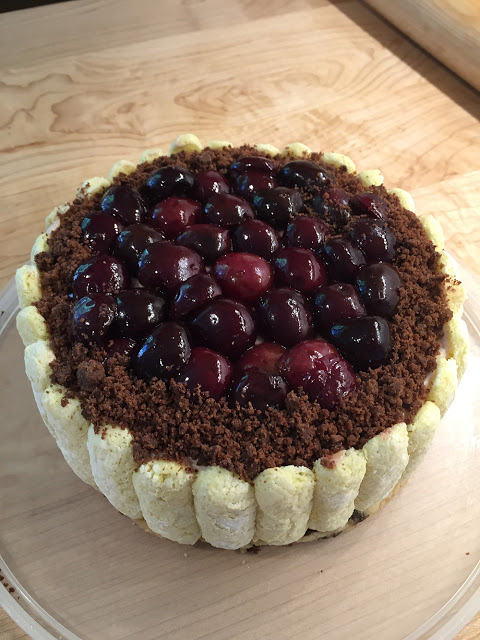
Once the mousse was set (after an hour or so in the freezer), I topped it with the cooled cherries and added a rim of crushed chocolate shortbread cookies to give it a bit of flair.
| Michigan cherry charlotte |
And, of course, for dessert we three simply had to sample the cherry charlotte.
We agreed that the mousse was SOOO . . light with a clear taste of cherries. The shortbread crust, cherry topping and dashes of chocolate all made for a tasty combination.
And after an overnight in the fridge it was still delicious the next day - yessirree!
Here's to summer!!
Back to basics - pâte brisée
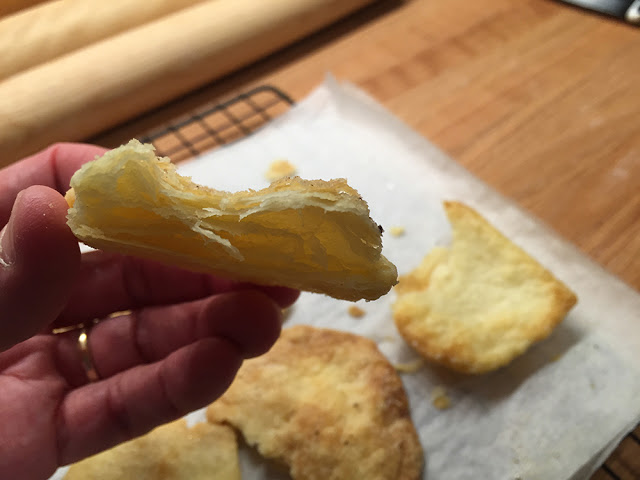
/now THAT's flaky
In the wake of a tart class that I taught a few months back, when my apple tarts baked with pâte brisée came out soggy and under baked, I was determined to revisit the techniques involved in making this classic dough. (SIDE NOTE: in my defense the apple filling prepped by an eager culinary student was way too soupy, and the oven I used was not familiar to me, but I still felt the need for a refresher!)
Known to pie and tart bakers as flaky pie dough, pâte brisée can cause the most confident baker to question why, why, why doesn't this dough come out perfectly EVERY time?! Some years ago I compared a number of recipes and methods for pâte brisée and came away with a version that was delicious and seemed to be just the thing. But since then, even though I've used the same recipe and technique every time, I've had my share of less than stellar results. Maybe it's just me, eh?
I proceeded to look at recipes from Christophe Felder (one of my favorite tart makers) and Thomas Keller of French Laundry/Bouchon Bakery fame. In addition I obtained the recipe that the bakers at Nonna Cafe in Ada use (I've had their quiche many times and the crust is always deeelish!). The last addition to my test quartet was the recipe I've been using for years.
Truth be told, many pâte brisée recipes are very similar, but what intrigued me about these four was the difference in ratios of butter to flour, how much water is added and how the ingredients are brought together.
Here we go!
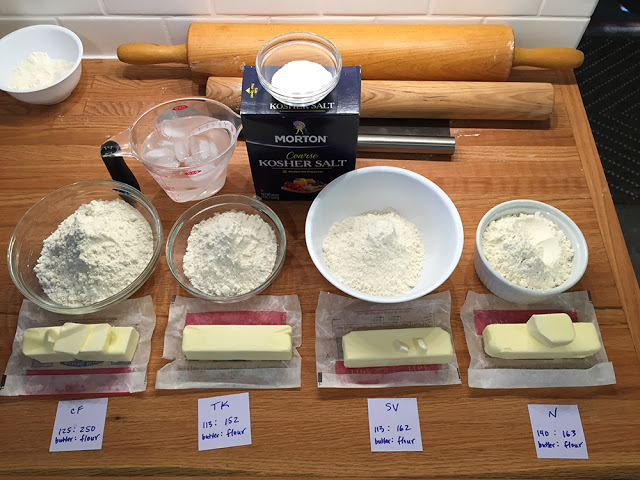
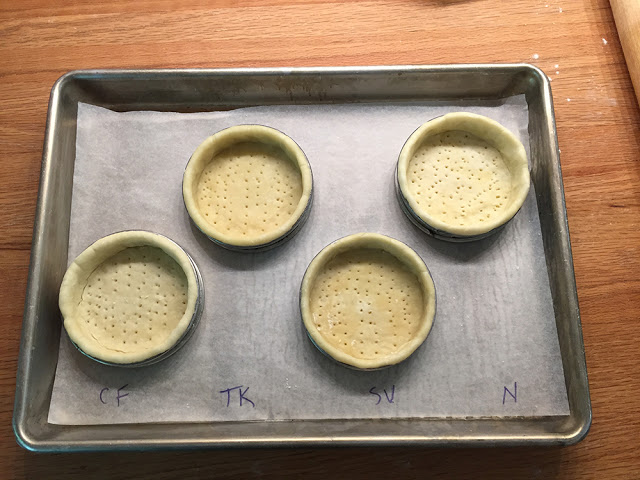
Pâte brisée is simply flour, cold butter, salt and ice water (some recipes add a bit of sugar too). In the photo below I've provided the amounts of butter and flour for each of the four recipes. From left to right you see the following ratios plus baker’s percentages for the butter: Felder (CF): butter:flour at 1:2 (50%); Keller (TK) 1:1.35 (74%); me (SV): 1:1.44 (69%); Nonna (N): 1:1.18 (85%) (getting much closer to 1:1!).
In this test I'm using Challenge unsalted butter made in California with the claim that it is from cows not treated with growth hormone rbST. I've been using it for some months now and it's good.
I've discovered over the years, working with various tart and shortbread doughs, that the closer the weight of butter gets to the weight of flour in the dough (butter weight is typically about 2/3 flour weight), the more tender and delectable the end result.
At any rate, this promised to be interesting.
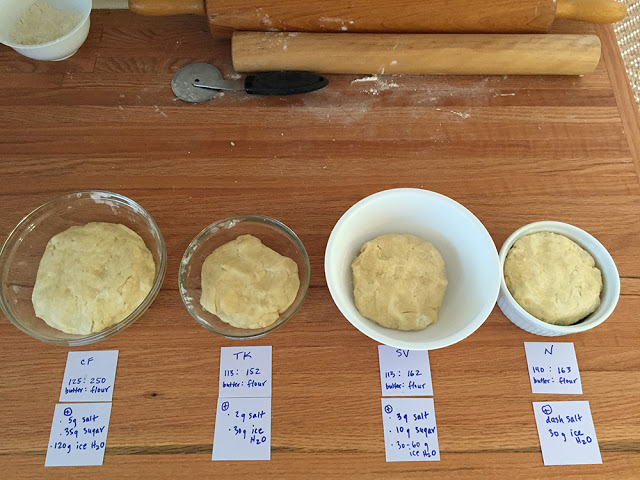
Below are the four finished doughs with all ingredient amounts listed. The Felder recipe makes a larger quantity than the other three, but you can still appreciate the ingredient ratios.
Just a note - the TK, SV and N recipes are typically double (enough for two 9" tarts or pies) what I note below. I made smaller recipes for testing purposes.
So how are these all put together, you might ask? I've always followed the "flaking" method when making pâte brisée by hand.This involves working pieces of cold butter into the flour and salt, purposely leaving large "flakes" or flat pieces of butter in the mixture. Cold water is then added in increments and mixed lightly and quickly until the dough holds together. The dough is then wrapped and chilled before rolling it out for use.
Here are the differences in technique for the other three doughs.
Felder calls for soft butter to which is added the salt, sugar and flour. The mixture is sanded by hand to coarse crumbs, then 120 gm ice water is added and mixed gently until the dough comes together. The amount of water to flour is much higher in his recipe. He claims that this dough holds very well after baking, doesn't soften and is great for juicy fruit fillings.
Keller's method involves mixing half the flour with the salt, adding butter pieces on low speed in a mixer until NO butter is visible. Then on med-low speed the remaining flour is added, followed by the water. Mix until just combined, wrap and chill.
Nonna's dough is made with a food processor, although I chose to sand the butter in by hand. Place the flour and salt in the bowl, pulse in the cold, diced butter to achieve coarse crumbs, then add the ice water and pulse just until it comes together. Wrap and chill.
All just a little bit different!
Once the four doughs were chilled I rolled them out to make 80 mm filled and baked blueberry tarts and blind baked then filled lemon tarts.
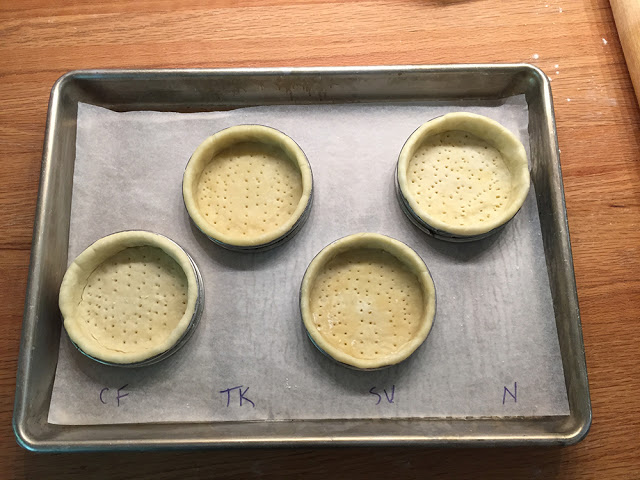
Here are the rings lined for the blueberry tarts.
Here's what I observed when rolling these doughs.
The Felder dough, even after a good chill, felt weirdly spongy and soft (NOT in a good way). It was sticky and didn't hold its shape well when lining the ring.
The Keller dough was smooth, firm and tight, rolled beautifully and held very nicely when lining the ring.
My SV dough felt a bit rougher and drier than the others, although rolled well and held when lining the ring.
The Nonna dough felt soft (in a good way) - not too wet, not too dry - rolled nicely and held well when lining the ring.
I popped the lined rings into the freezer to firm up before baking.
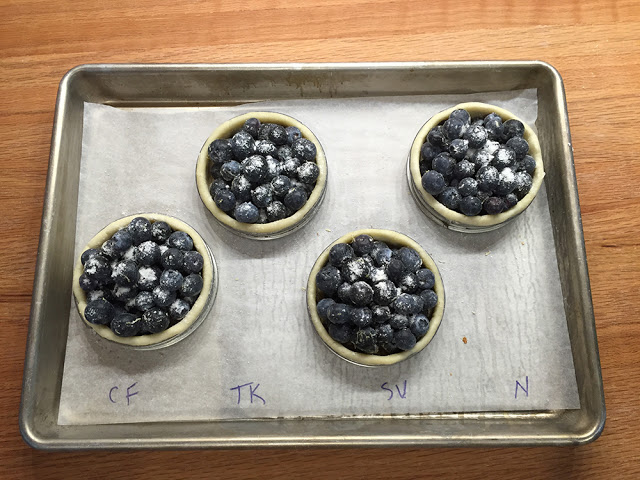
First the blueberry tarts. I sprinkled some fine, dry bread crumbs in the bottom of the tart shells - this is meant to create a barrier between the filling and the crust to help reduce the chance for sogginess. Then I filled each with fresh blueberries that were tossed in a little lemon juice, sugar and flour ( for four 80 mm tarts I used a generous 3 cups of berries with 1-2 teaspoons lemon juice, 4 - 6 tablespoons sugar (or to taste) and 2 tablespoons of flour).
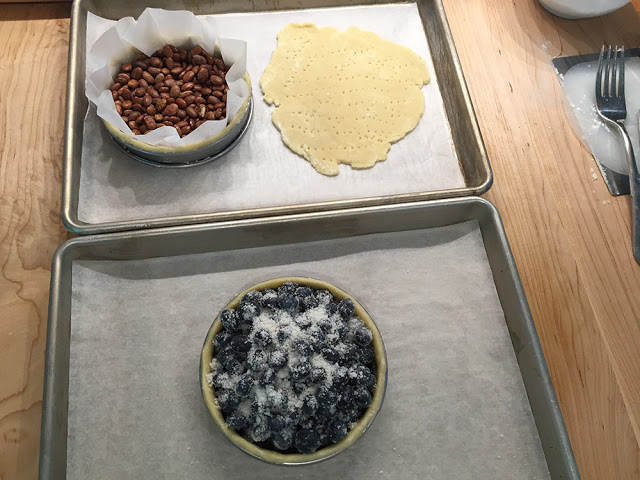
Heat the oven to 425 F. Here they are ready to go in.
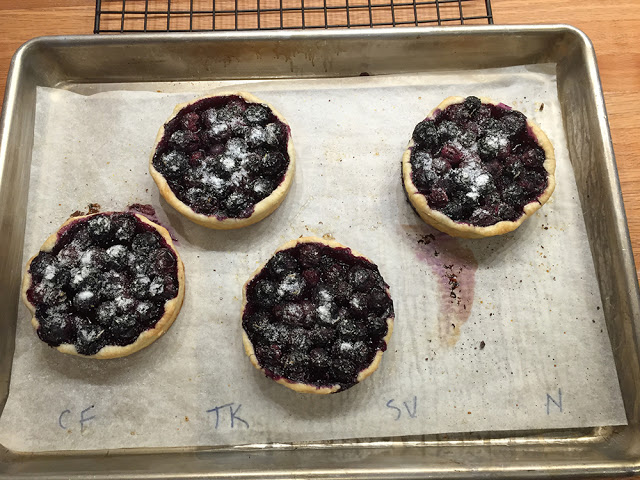
I gave these 5 minutes then decreased the oven temp to 400 F. Continue baking another 20-25 minutes or so until the berries are bubbly and the crust is nicely browned.
I sprinkled vanilla sugar atop the blueberry tarts once out of the oven.
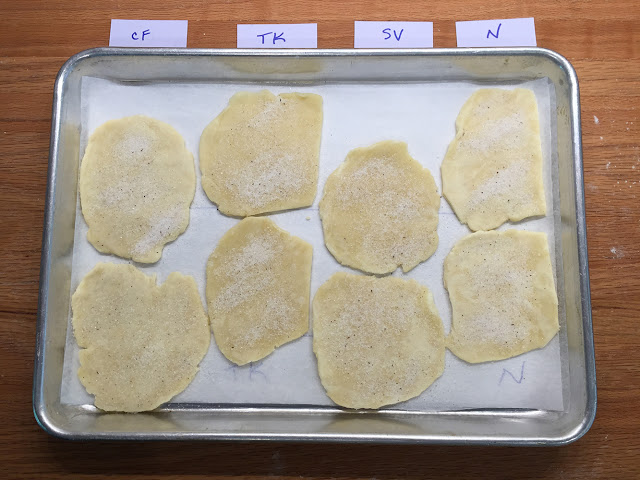
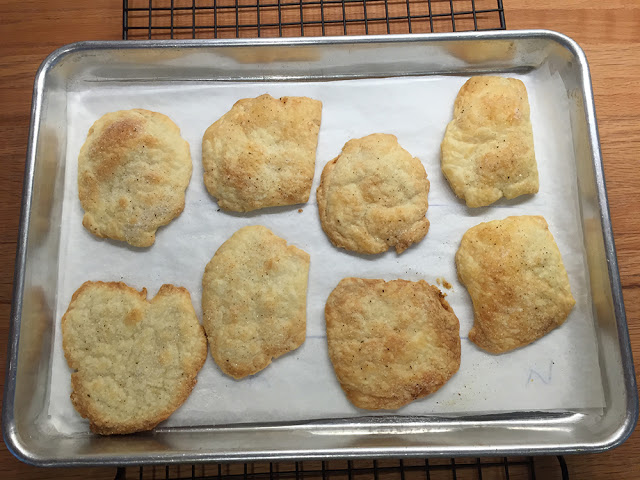
I also rolled out some scraps of each dough to bake all by themselves. I wanted to see how they puffed and tasted sans filling. A sprinkle of vanilla sugar gave them just the right something.
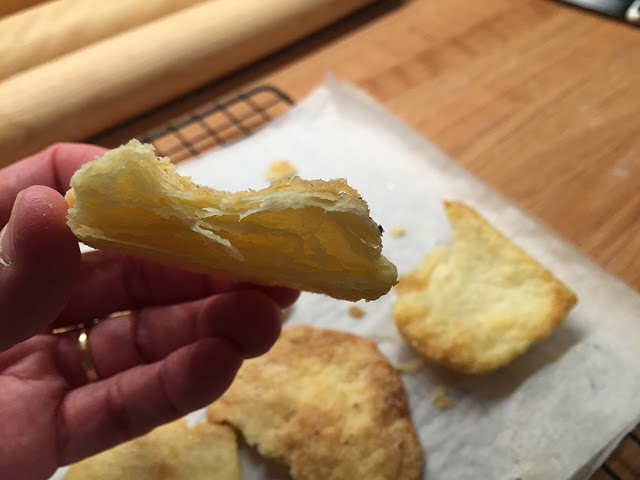
It's a bit difficult to see from the photo above, but all of the scrap pieces puffed up nicely, except the Felder dough. Here’s the Nonna dough, beautifully flaky.
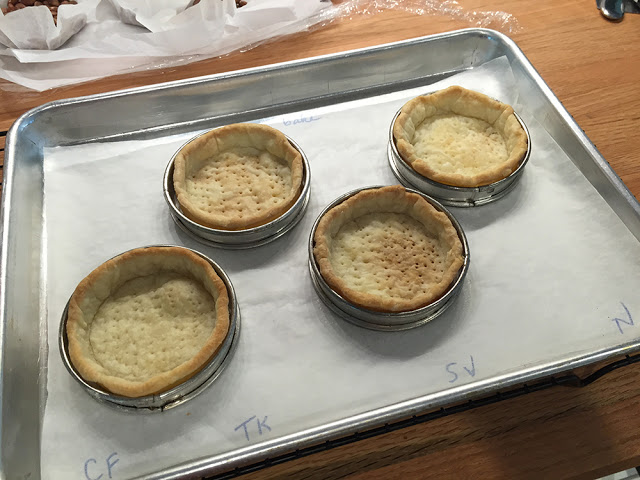
Now for the blind baked tarts with oven temp at 400ºF.
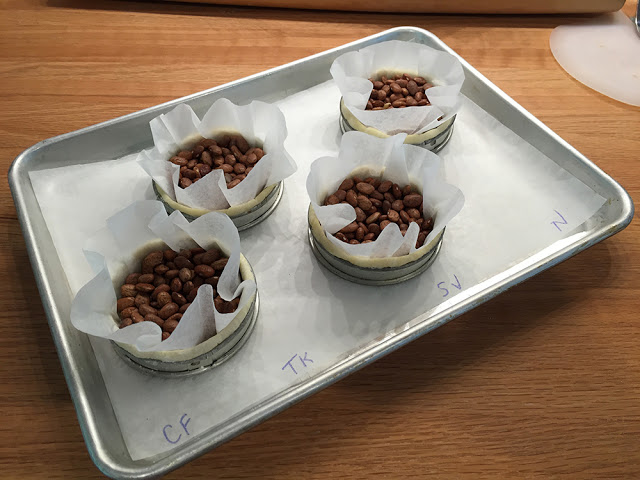
Freeze the lined rings for 10-15 minutes then fill with parchment rounds and dry beans.
Bake with weights for 15 minutes, remove weights and bake an additional 5-8 minutes until nicely browned. Always pay attention to what's going on inside your oven!!
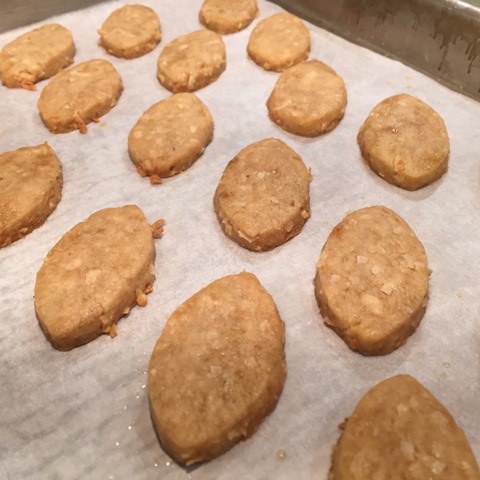
All four doughs held their shape pretty well during baking with the usual amount of shrinkage away from the rings.
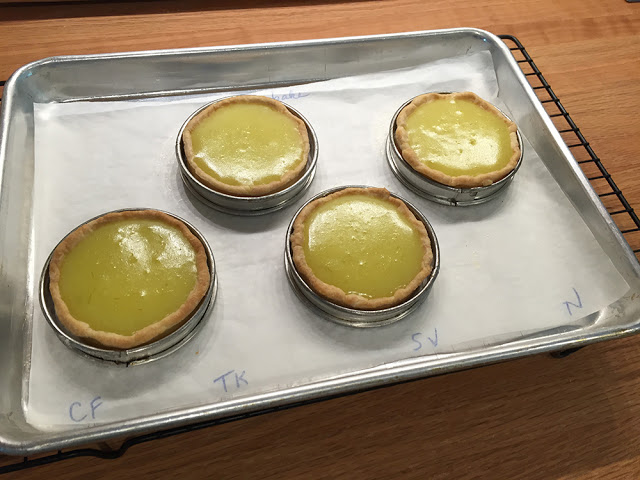
After reducing the oven temp to 300ºF I filled them with my current favorite lemon filling and baked them until the filling was set, about 10-15 minutes. Check out my post from 2/16/16 on lemon-lime tart and here’s a link to two of my favorite tarte au citron recipes.
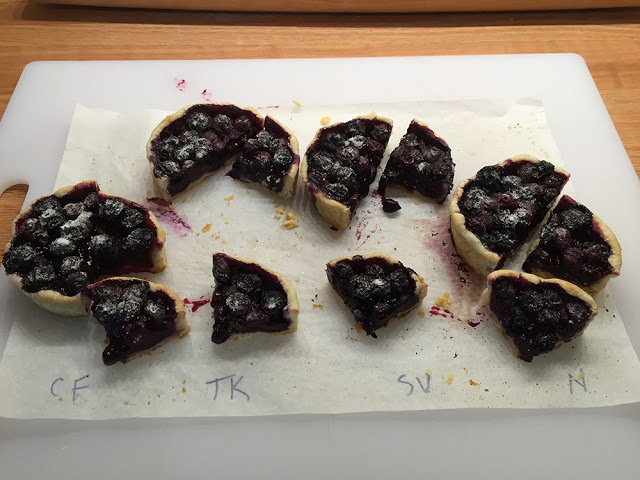
Now for the tasting. Steve was on hand for the event, my ever present tasting guru. First the blueberry.
I realize you can't appreciate the difference in the doughs visually, but the first thing I checked was how they all felt when portioning them with a serrated knife, followed by how easily they cut with a fork.
Felder's crust was tough, both when slicing with a knife and when cutting with a fork. It was chewy in the mouth, not flaky or tender and the flavor was dull. No thanks.
Keller's cut very easily with both knife and fork, was tender and crisp with a pleasant and agreeable flavor.
Mine was just a tad resistant to cutting compared to Keller's, slightly less tender but crisp in the mouth with good flavor.
Nonna's cut easily with great flavor and texture.
All of the above observations held when tasting the plain baked scraps of dough. Felder's was chewy and tough, broke apart with a bend rather than a crisp snap without any flakiness. The other three were flaky, crisply tender and delicious.
When cutting and tasting the lemon tarts, the same observations held true. (Love that lemon filling!)
Felder was the obvious loser. However the other three were all good, leaving me with the question - now what?!
As if you haven't already had enough, I decided to do just a bit more reading and research and came upon one more technique that sounded promising. I'll credit this one to Kristen Rosenau who writes the blog "Pastry Affair" (http://www.pastryaffair.com).
First I tweaked my recipe (it's coming at the end, I promise!) by increasing the butter to bring the butter:flour ratio to 1:1.25 (80%), in between TK and N.
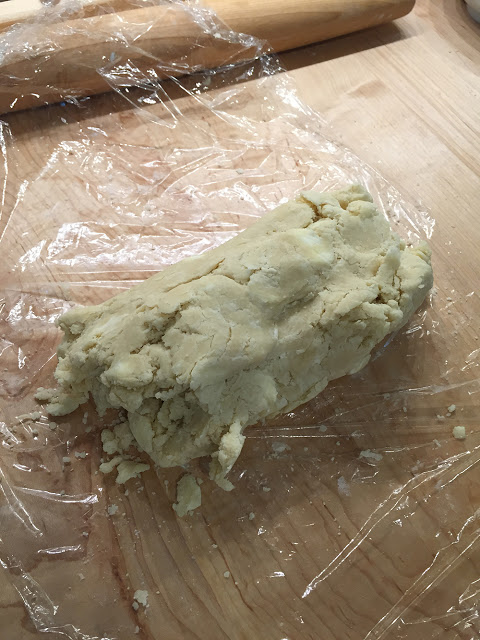
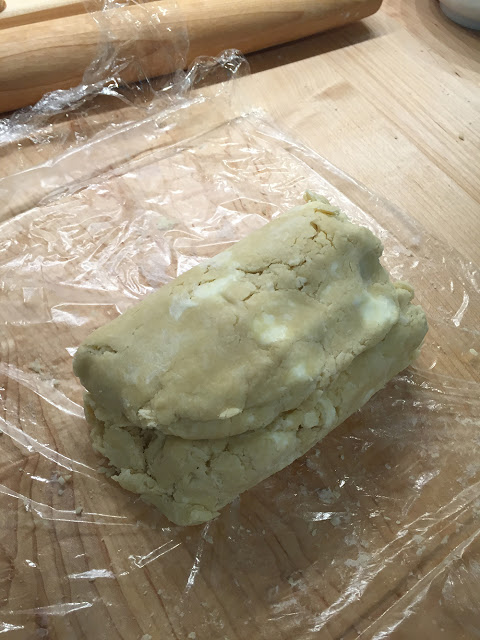
In Kristen's by-hand method she takes half of the diced cold butter and sands it into the flour and salt. Then she adds the other half of the butter in larger diced pieces and "flakes" them, leaving flat pieces of butter visible. Add the ice water incrementally and once the dough holds together, turn it out onto a piece of parchment or plastic wrap. There may very well be some crumbly pieces at the edges. Don't worry.
Using the plastic wrap as an aid, fold the dough in three.
Flatten and turn it 90 degrees then fold in three again (basically a rustic version of puff pastry).
Flatten, wrap and chill for a good hour or more.
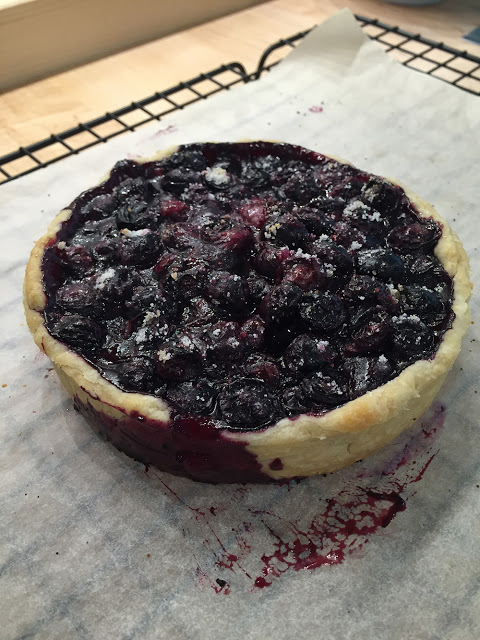
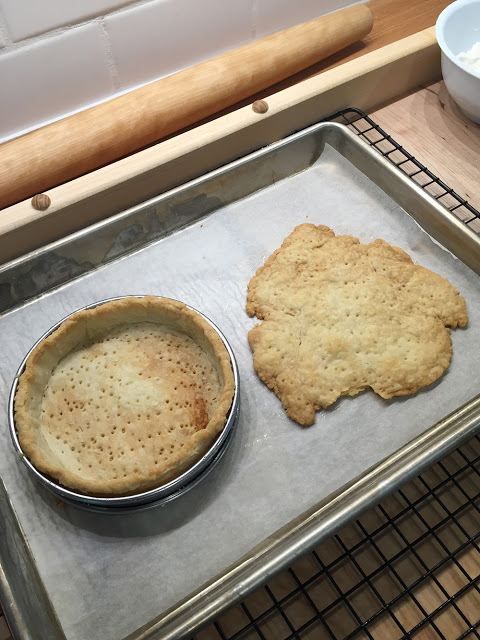
I then performed the same steps as with the quartet of doughs already described, making a filled and baked blueberry tart, a blind baked and filled lemon tart and baking a piece of the dough all by itself.
Ready for the oven above and all baked below.
Here’s the au naturel dough all baked up.
And the finished lemon tart.
Of course while the blueberry and lemon tarts were cooling, I just had to snitch a taste of the plain crust - YUM! Tender, flaky and all around delicious.
Once they were cooled, Steve and I tasted the blueberry and lemon versions and found the crust to be wonderfully tender, flaky and buttery. And, to top it off, they were still delicious the next day! I like that.
So here's my version that I intend to use from this day forward.
Pâte brisée (makes approximately 645 gms of dough, MORE than enough for two 9" tarts; just freeze what you don't need). Click here for a printable PDF version.
325 grams all purpose flour
3/4 teaspoon salt
OPT: one tablespoon granulated sugar
260 grams cold, unsalted butter (1/2 small-dice, 1/2 large-dice)
60 ml (4 tablespoons) ice cold water
Mix the flour, salt and sugar (if using) in a large bowl.
Sand in the small-dice butter with your finger tips to achieve coarse crumbs.
Flake in the large-dice butter leaving flat, largish pieces in the mixture.
Add 1/2 the water, toss with a fork then toss and gently squeeze with your hands. Add additional water by tablespoon until the dough holds together.
NOTE: if the dough still seems dry and too crumbly to hold together (as it might on a cold, dry winter's day), continue to add additional tablespoons as needed but don't exceed 120 ml (8 tablespoons).
Place the dough onto a piece of parchment or plastic wrap; using the wrap as an aid, flatten the dough and fold into thirds. Turn 90 degrees, flatten and fold in thirds again. Flatten, wrap and chill for at least an hour or overnight.
If you don't intend to use the dough for a couple of days, freeze it well wrapped for up to 3 months. A day before you wish to use it remove it from the freezer and place in the fridge to thaw overnight.
While this may not have been the most scientific of studies, it was indeed illuminating. I love experimenting and learning, especially when I get to work with dough. Yeah.
Have lots of fun folks!!