
Laminated pastries - what fun you can have!
/
I love both the process of making laminated dough as well as the variety of treats one can create with it. Through the summer months I don’t do much in that particular realm (just doesn’t seem quite right), but once autumn/early winter rolls around, it’s a new ball game folks!
Of course the standards are always on the table, my favorites being croissants, pain au chocolat, and croissant aux amandes. It’s often when I have a croissant class coming up (as I did in November), that I start making completed dough as well as portions of detrempe with which the students can work. They leave class with fresh croissants (and sometimes pain au chocolat) plus their own half batch of completed dough to play with at home.
Here’s my standard croissant dough recipe. For those of you familiar with the process, I’ve been playing around with the folding steps. I was taught in pastry school (whoa - going on 20 years ago!) that croissant dough is put through three 3-folds (also referred to as business letter folds). For awhile now I’ve been doing a 4-fold (or book fold) and a 3-fold and calling it good. But lately I’ve added a 2-fold at the end of that process. I like the way the layers come out. Don’t be afraid to play around with it.

A past project - looking good!
As a result of preparing for the class, I was left with some 1/2 portions of dough in my freezer (never hurts to make extra!). It was definitely time to use those babies up. NOTE: yeasted dough can be frozen, but it’s best to use it within 4 weeks or so. Much longer and the yeast sort of dumbs down and the rise isn’t as good.
As some of you may realize by now, I prefer my treats in smaller portions - you know that “everything in moderation” mantra I swear by. I aimed for three different laminated pastries, each version made using a half portion of completed dough.
Technical steps coming up!
For this project I initially intended to veer away from the standards (like pain au chocolat) but since I have a stash of chocolate batons on hand, I thought it best to use some of those for one of the three versions. For the other two I chose classic “Danish” and some twisty spiral knots.
Let’s go through the steps of each (I’ll try to keep it succinct!)
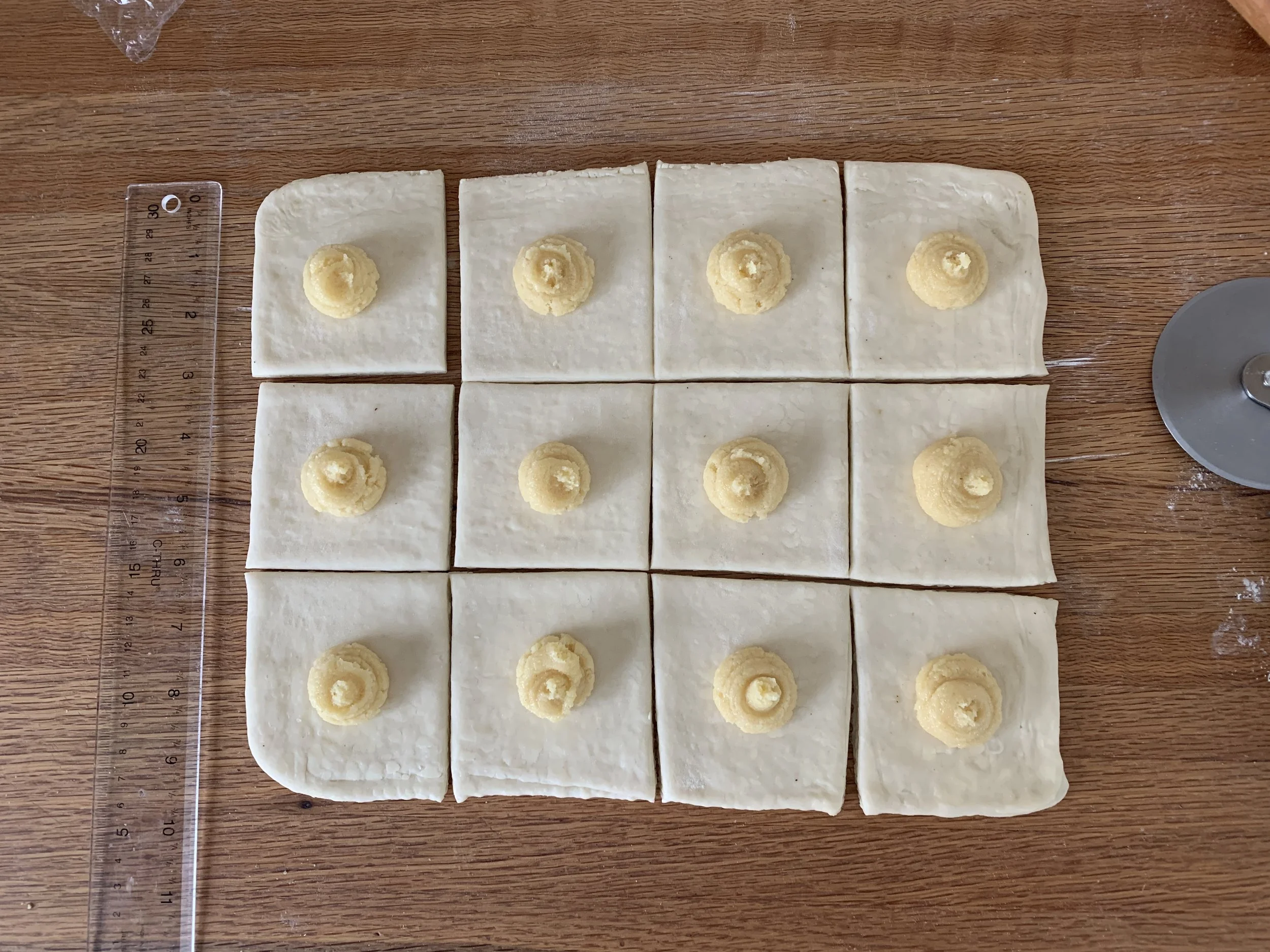
For standard Danish one would typically cut six ~4”x4” squares from a 1/2 portion (rolled out 8”x12”). To yield 12 smaller pastries I rolled the dough out to 9”x12”, cutting 3”x3” squares as seen below.
Pipe a round of crème d’amande in the center.
/
Fold the corners into the center and press them down to hold them in place.
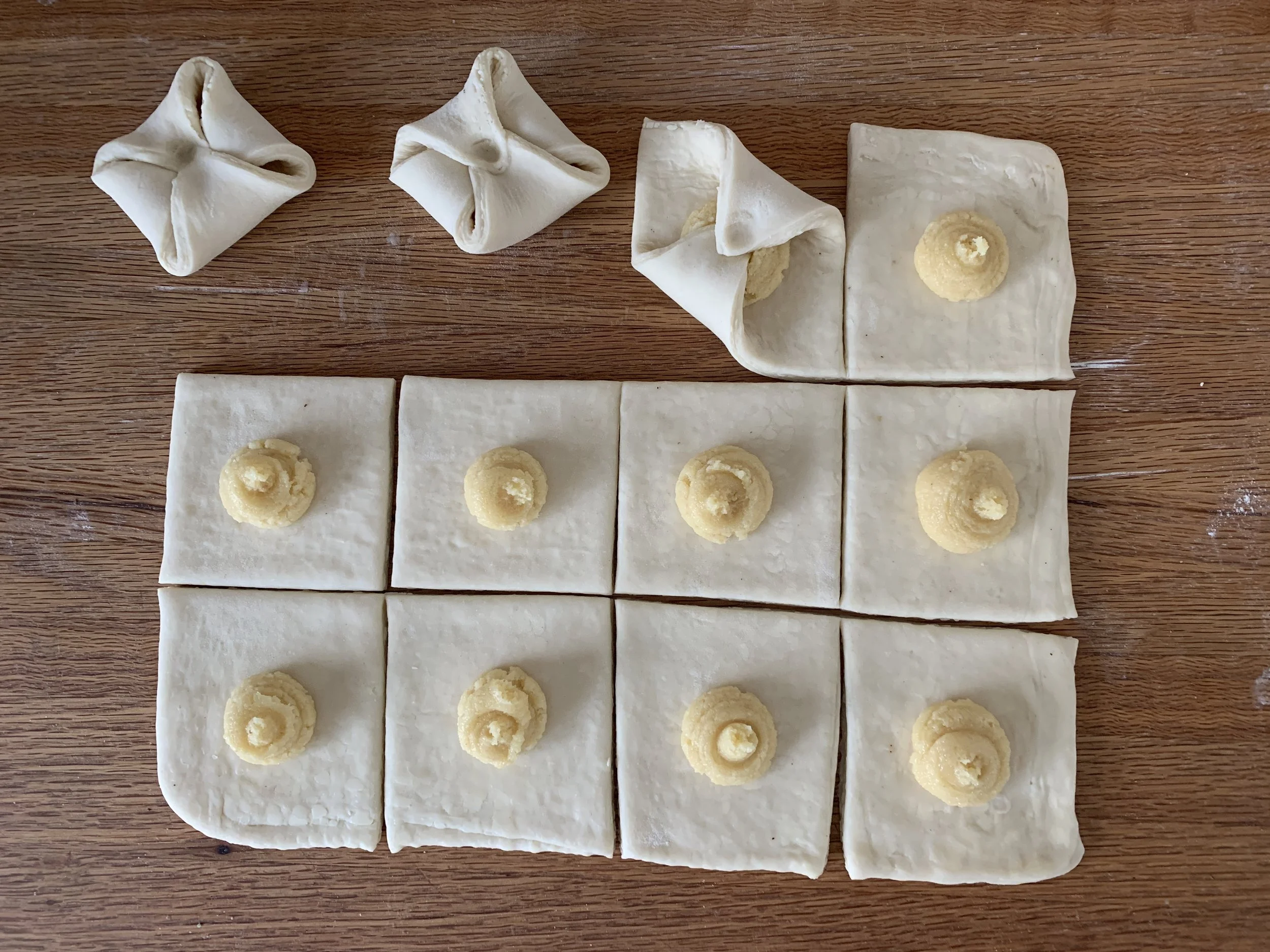
Don’t be afraid to push down in the center pretty firmly. Lightly brush with egg wash.
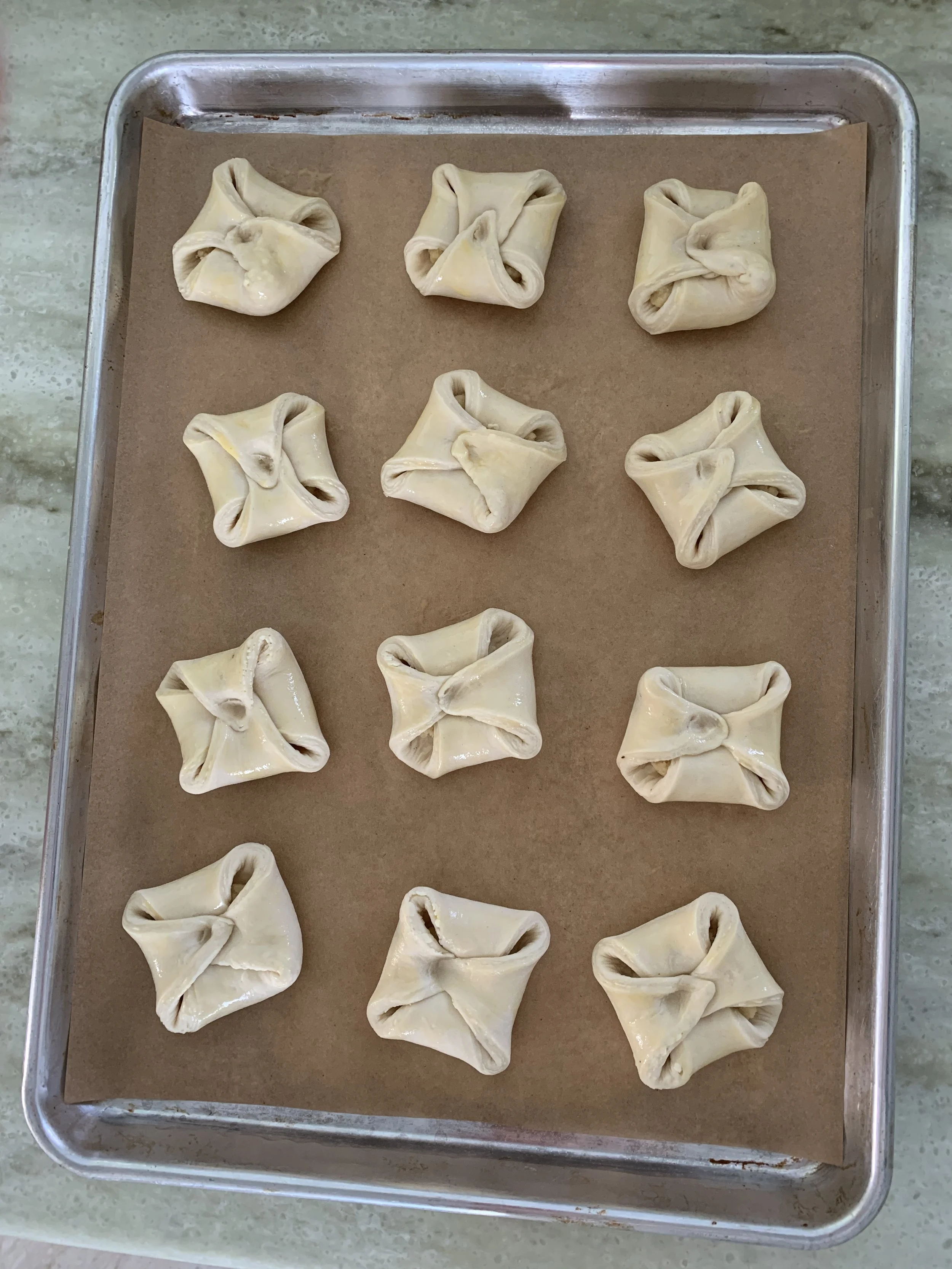
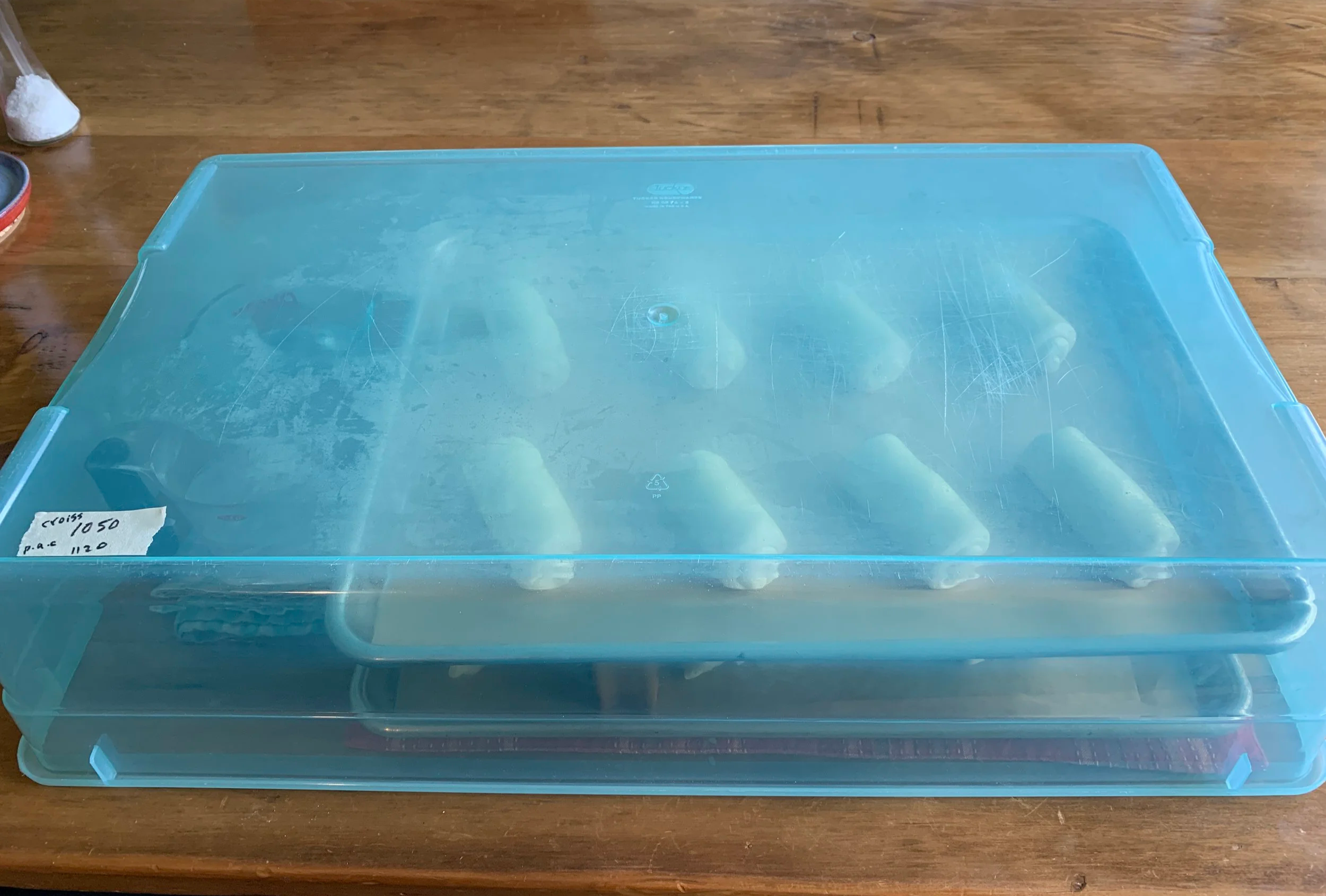
It’s important that laminated dough not rise at anything warmer than 78ºF. If too hot, the butter leaches out during the rise and the bake. I create a warm moist environment (yeast loves that!) either in my turned off oven with a pan of hot water in it or under an overturned clean tote bin with cups of hot water tucked next to the sheet pan(s).
Below is one example of my proof set up - my tote is large enough to stack 2 half sheet pans (using three wooden blocks) and have room on the side for a couple of cups of hot water to provide moisture. Here the bottom pan holds croissants and the top pain au chocolat - you can see the condensation inside the lid. Works great!!
Proof box set up
Let the pastries rise about 2-2.5 hours. Look for a more pudgy appearance and more visible layers.
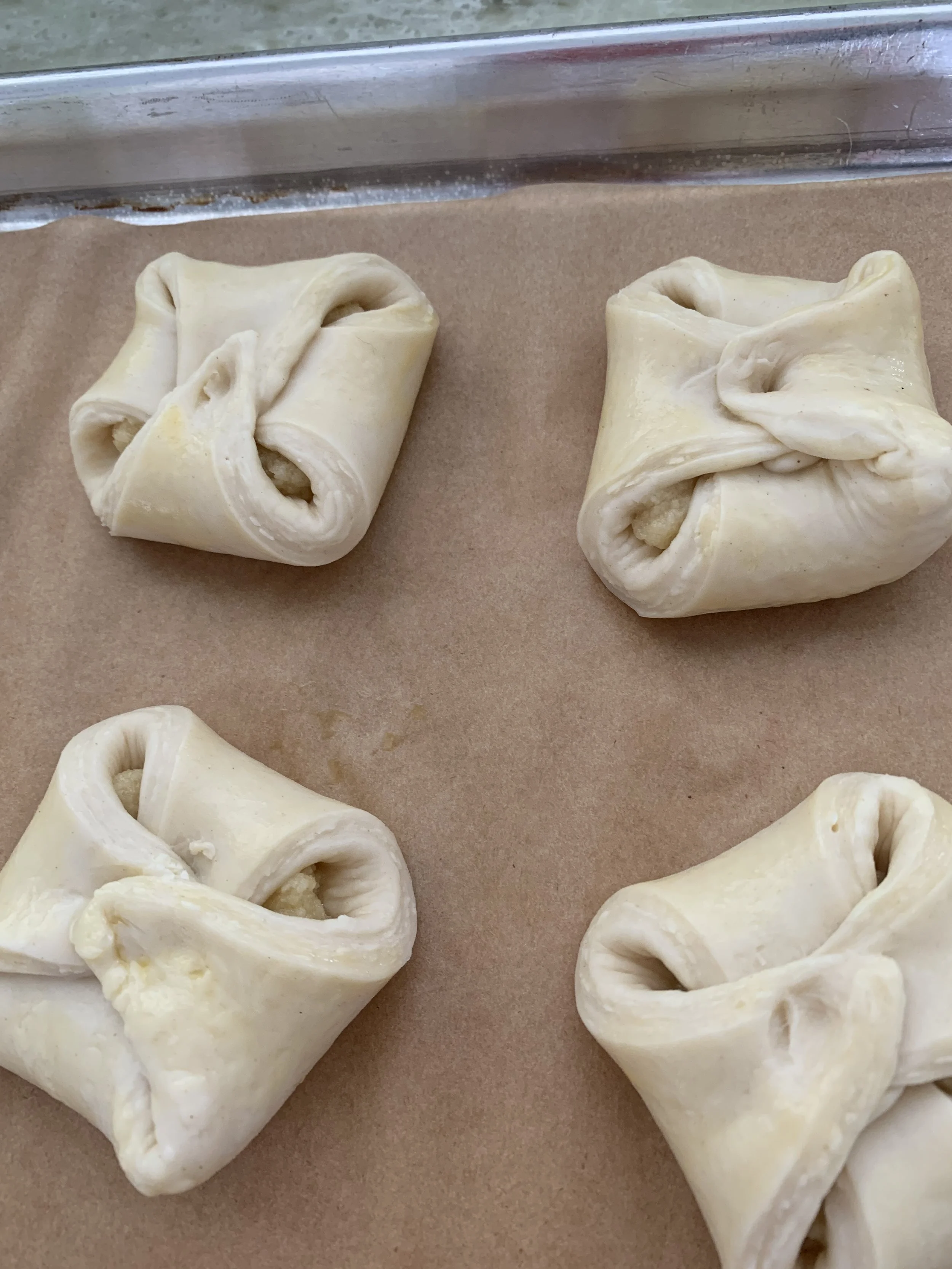
Top them with an additional dollop of crème d’amande, some apricot jam, crushed almond slices and a sprinkle of raw sugar. Give them a second egg wash.
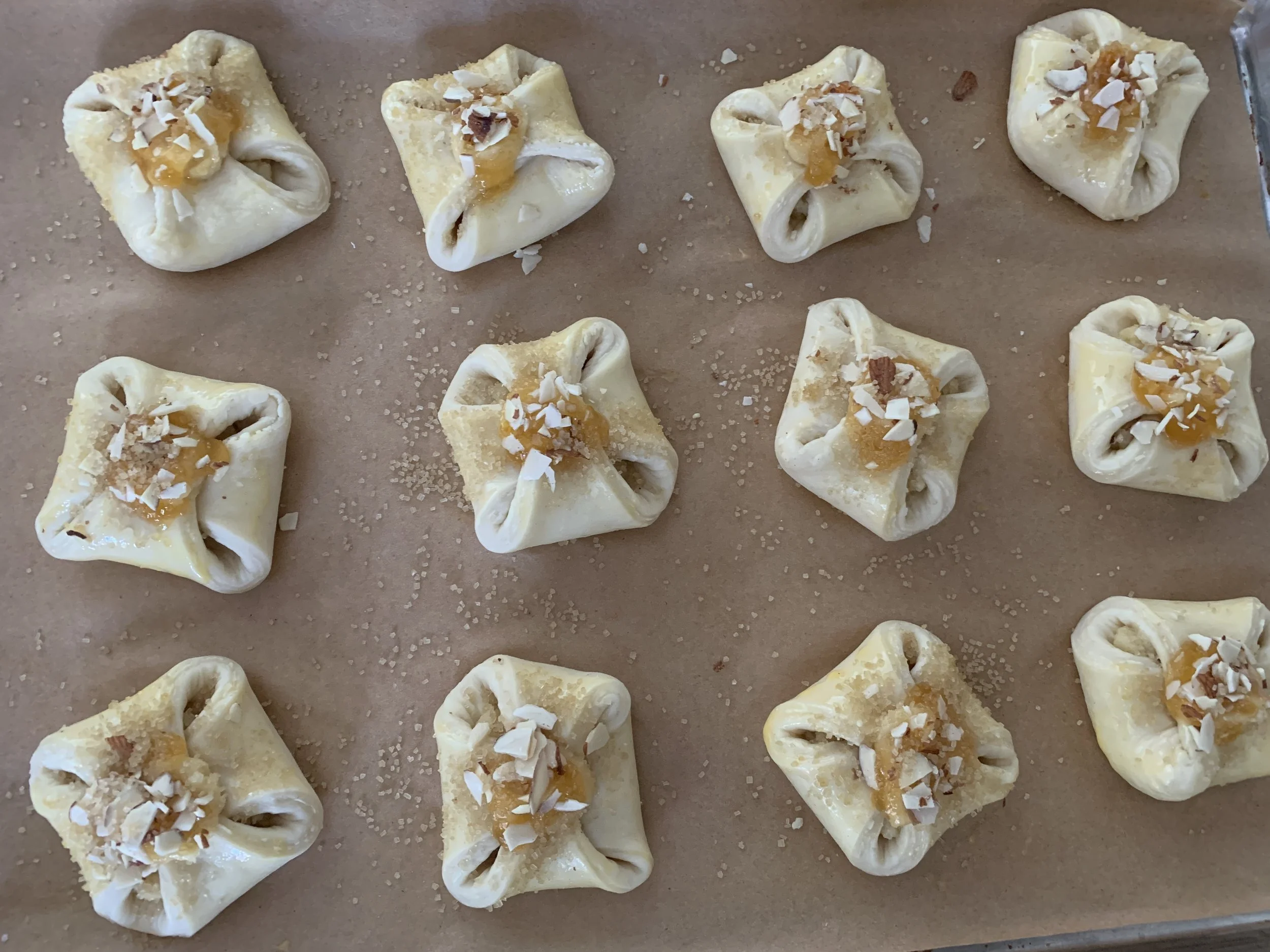
Start the bake at 400º - I always check at 10 minutes in and will reduce temp to 375º if browning seems to be going too fast. Total bake time is typically 20-25 minutes. Here my jam sort of slid off - next time I’d mix the jam and crème d’amande together, both to protect the jam from burning (Susan - you should have known better) and keeping the filling more in the center. Invariably the corners do open up some but, believe me, the end result doesn’t suffer.

Oh yeah!
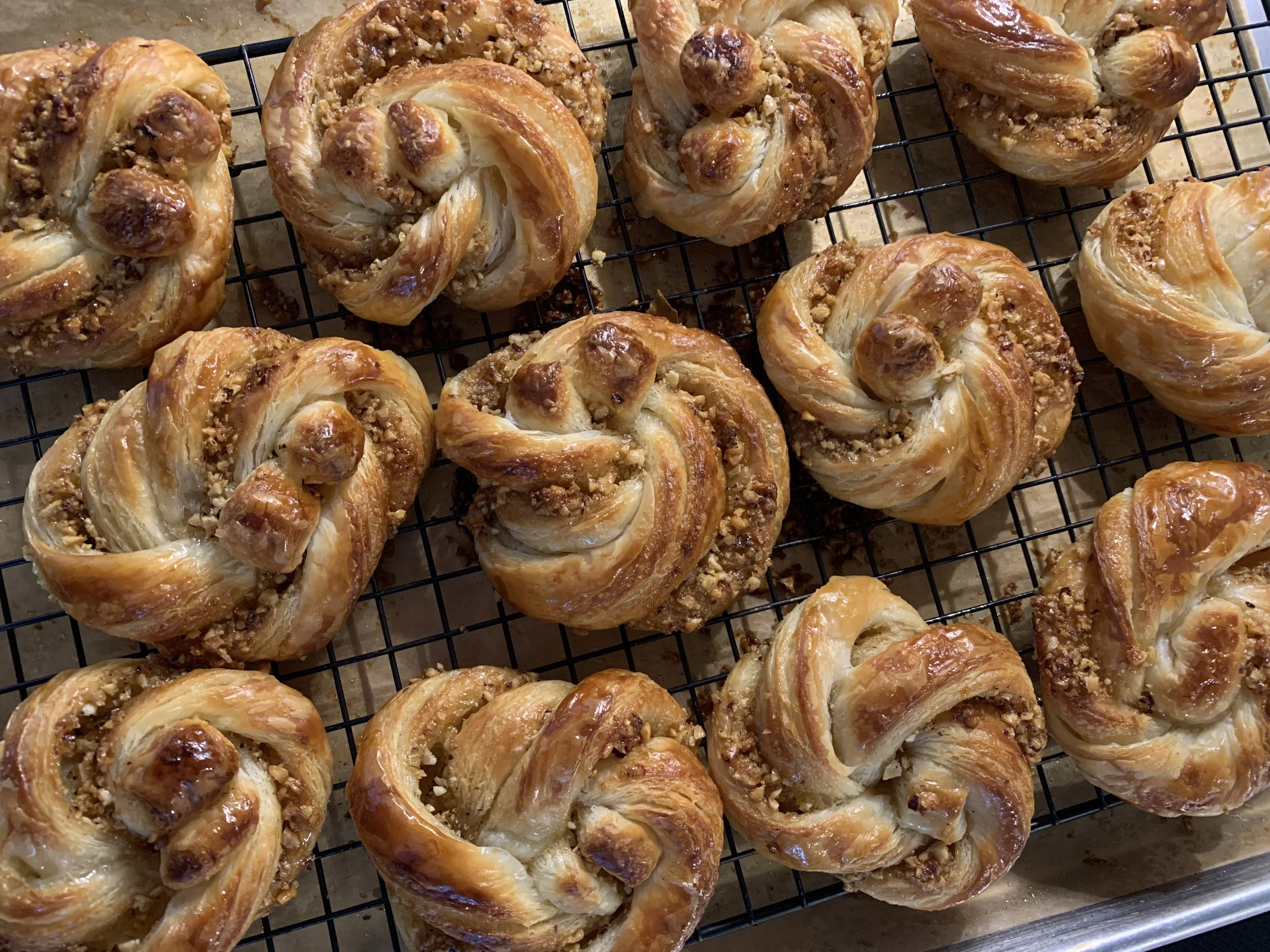
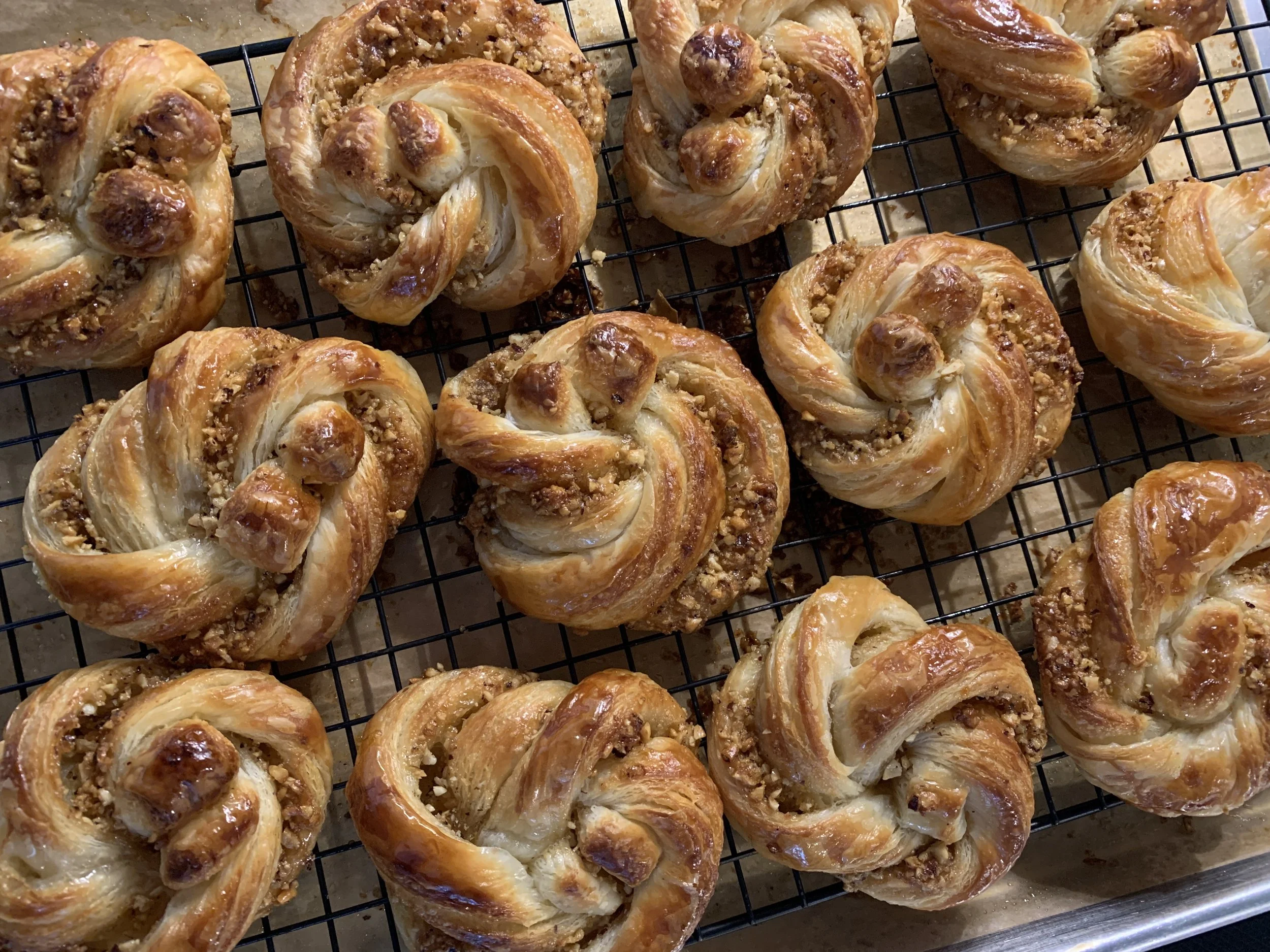
For my twisty spirals I decided on a hazelnut orange filling. For my 1/2 portion of dough I blended 42 g / 3 tablespoons soft unsalted butter with a large pinch salt, zest of an orange and 66 g / 1/3 cup brown sugar (light or dark - you decide).
I rolled the dough out to a 9”x18” rectangle and crumbled the filling mixture over one half. TIP: I didn’t do this here but, when you have a crumbly filling, it helps to blend in a bit of egg white to give it some cohesion.
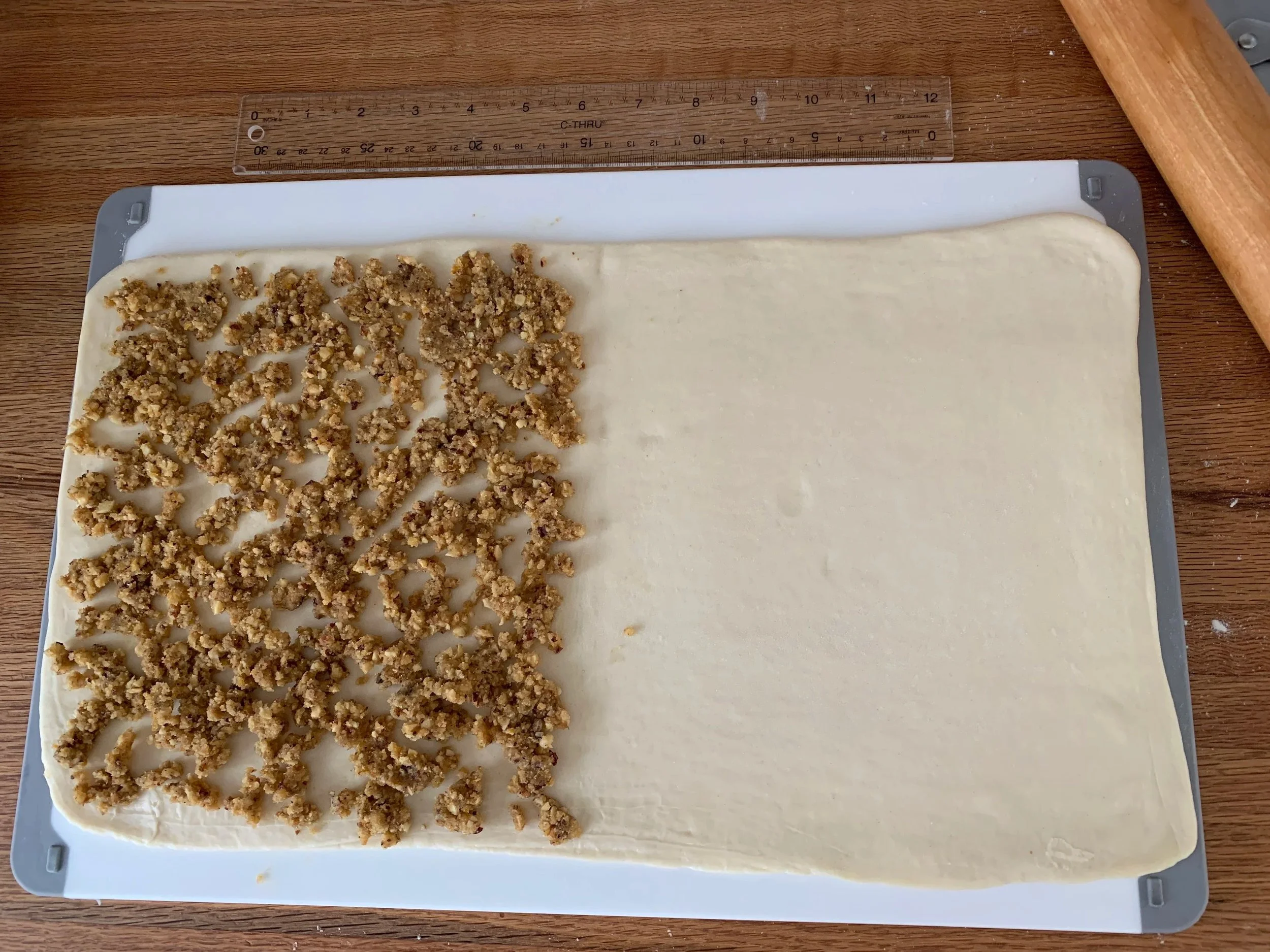
Fold the bare half of the dough over the filling covered half and lightly go over it with the rolling pin to press things together. I end up with a 9”x9” -ish square.
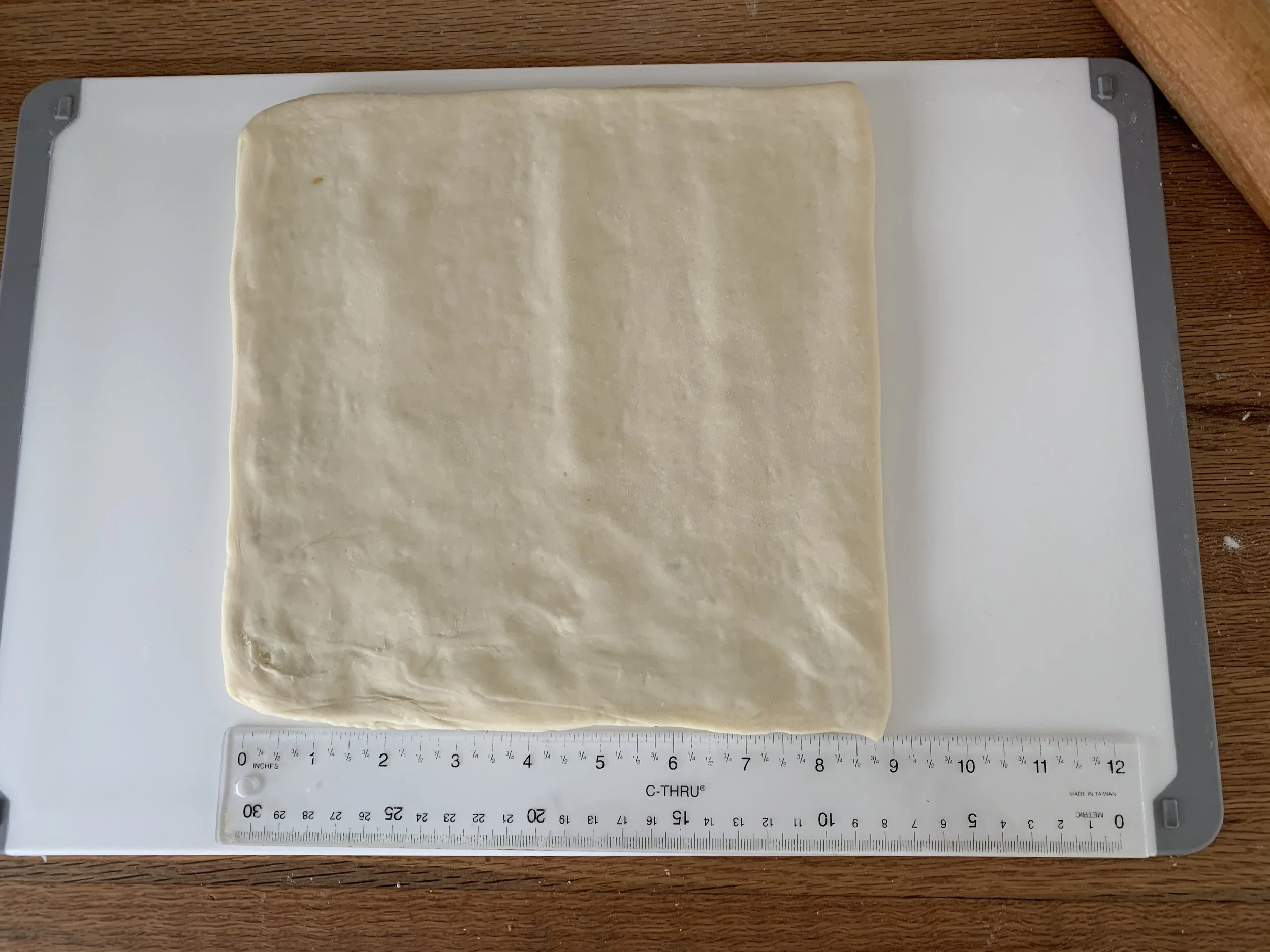
I wanted a yield of 12 pastries so I cut 3/4” strips and twisted and knotted each. Every time I do this it comes out a bit differently. Play around with it.
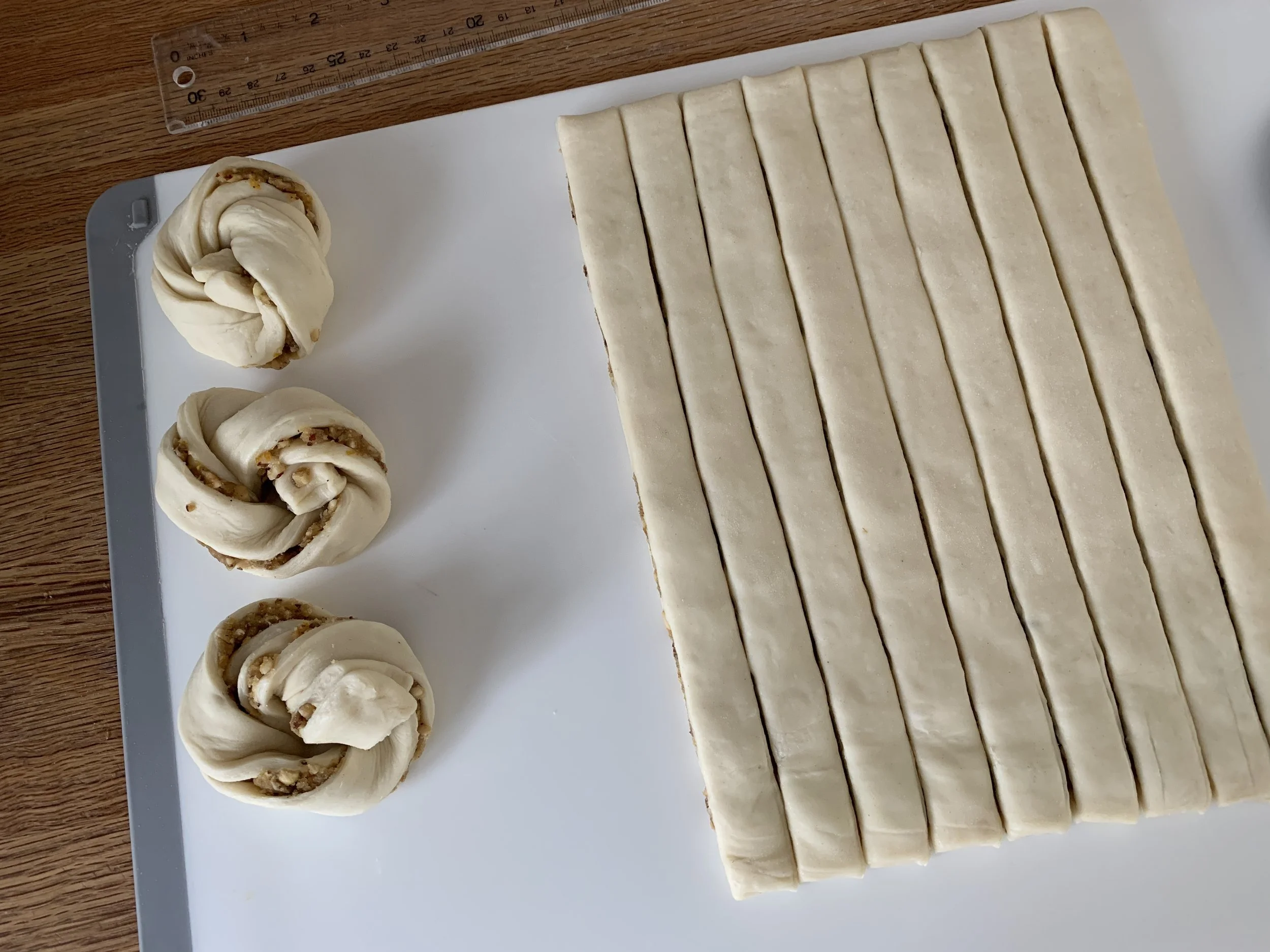
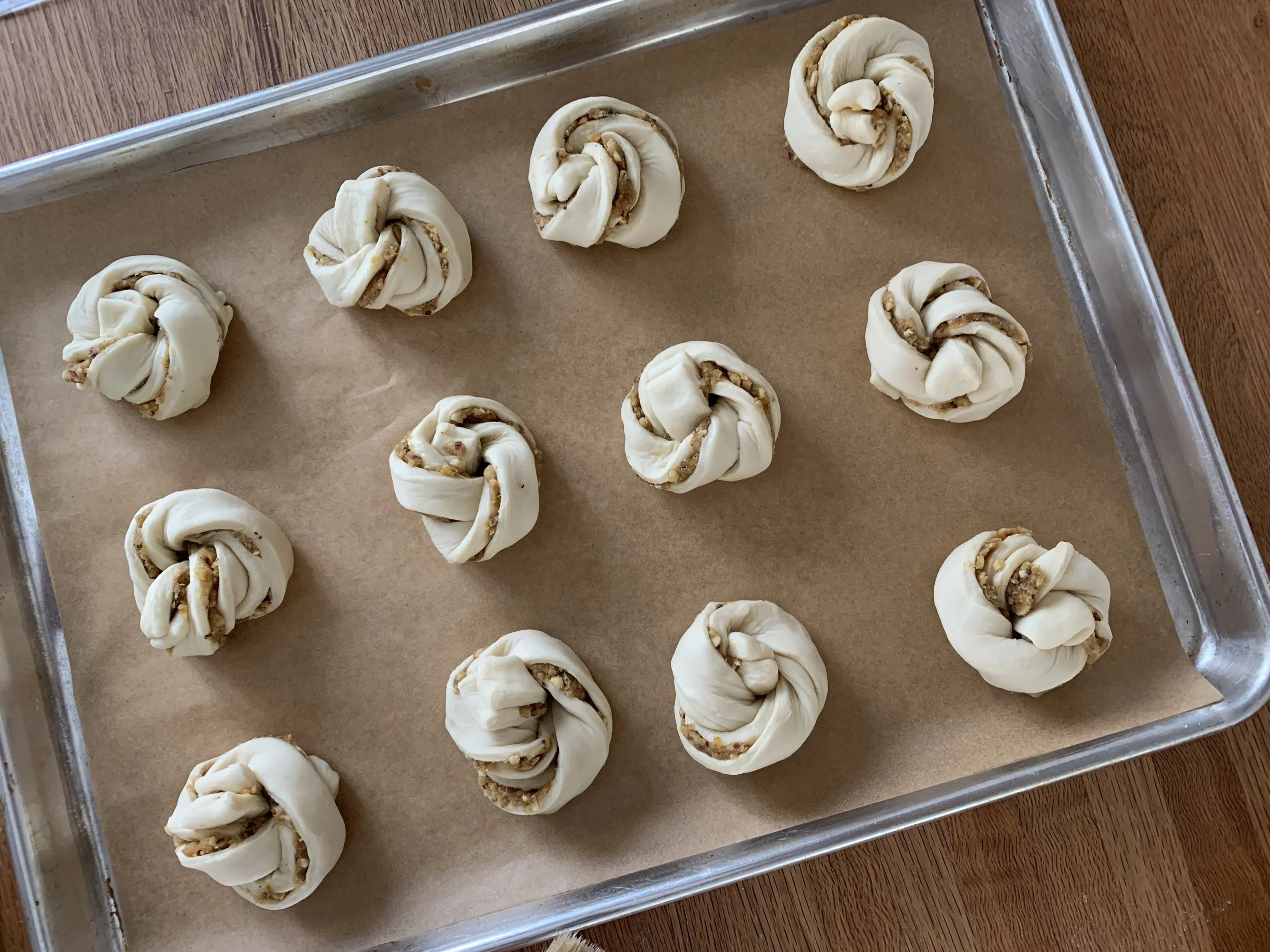
Egg wash, let rise a couple of hours. You should appreciate more fullness as they’ve risen. Lightly egg wash a second time.
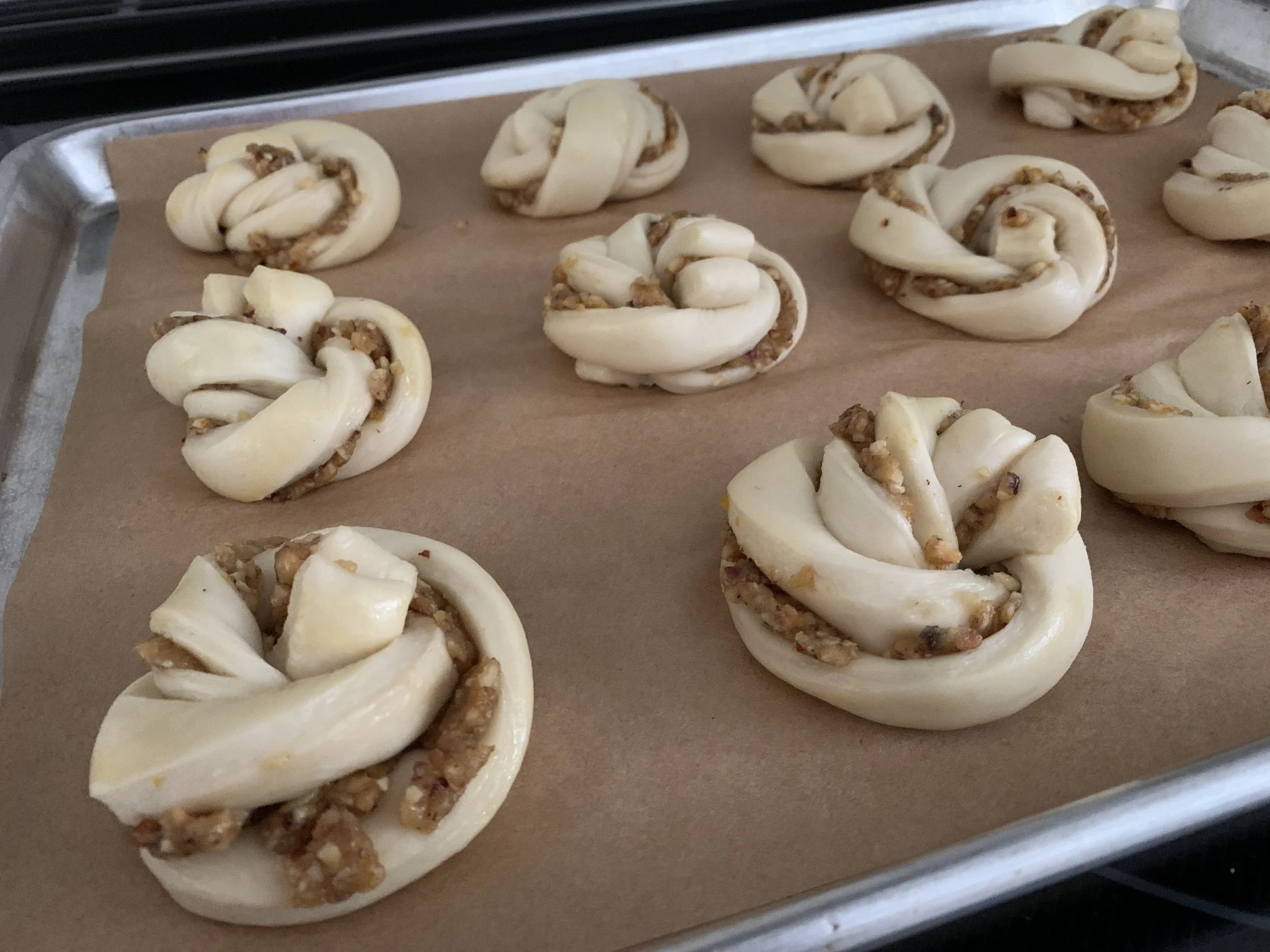
See that Pudginess?
Bake at 375º about 20-25 minutes. I brushed ‘em with some vanilla simple syrup just out of the oven.
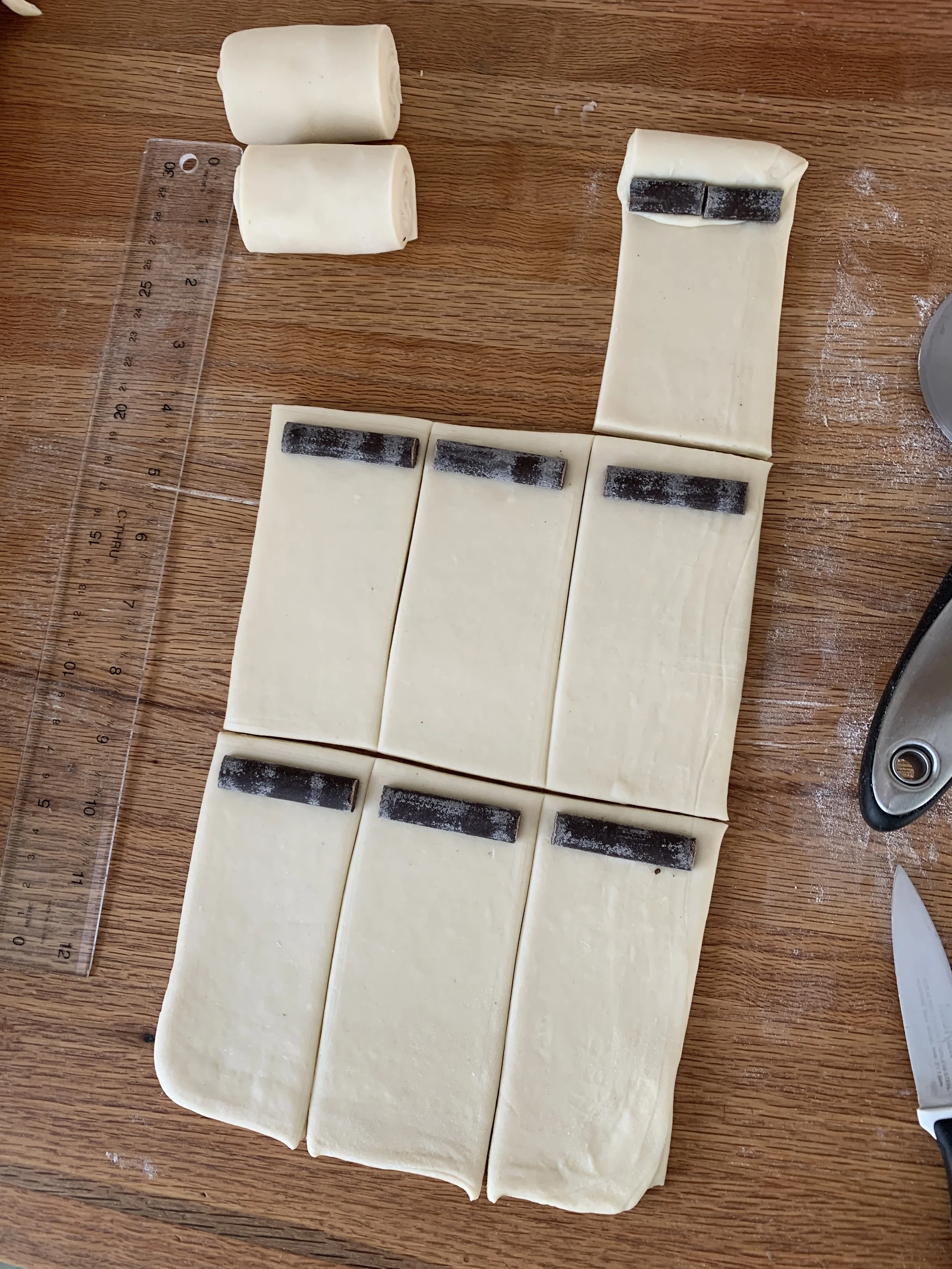
Last but not least - pain au chocolat. Normally a p.a.choc is about 3” wide (the width of the batons used) and a half batch of dough yields six standard sized pastries.
To go for a smaller, narrower version, I cut my batons down to 2”, allowing me to get 9 portions out of the half batch of dough. To achieve that, roll the dough out to a touch over 6” wide and about 15” long
For each pastry rectangle you want enough length of 4.5 to 5” to form a decent log. Place one baton piece across one end, just in a bit from the edge. Roll that edge over the baton then place the second baton (or pieces placed together) tucked up against the dough/first baton. Get it? Then roll it up into a snug log.
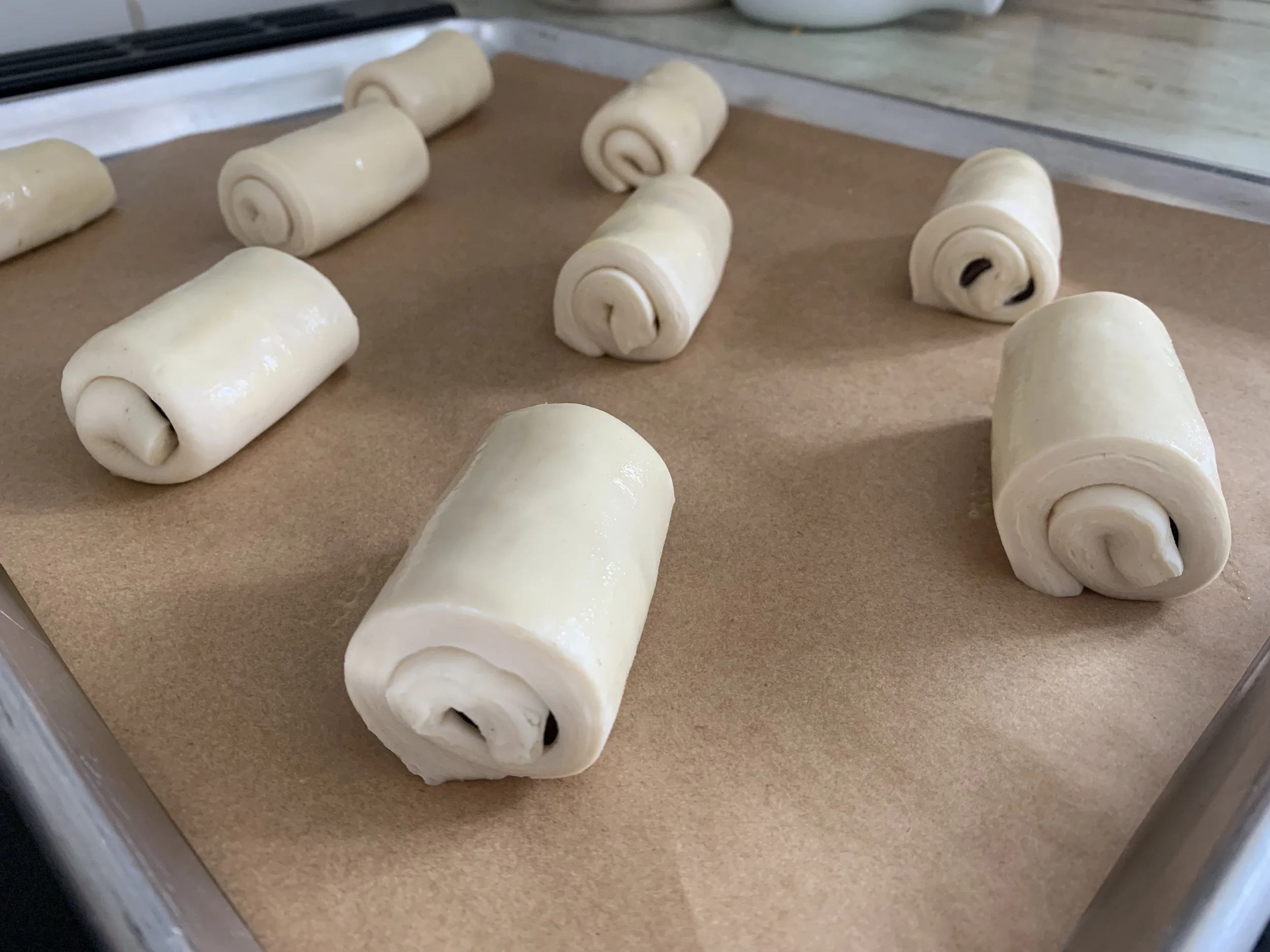
It’s important that the visible cut end of the formed roll be face down on the sheet pan - enough to keep the pastry from rolling open during baking. Don’t worry - it does happen, but they still taste good!
Below is the side view of the finished shaped logs - you can see how the end edge is just underneath. If you roll it back too much, the whole thing will unfurl during rising/baking; roll it more forward and that cut end will open right up.
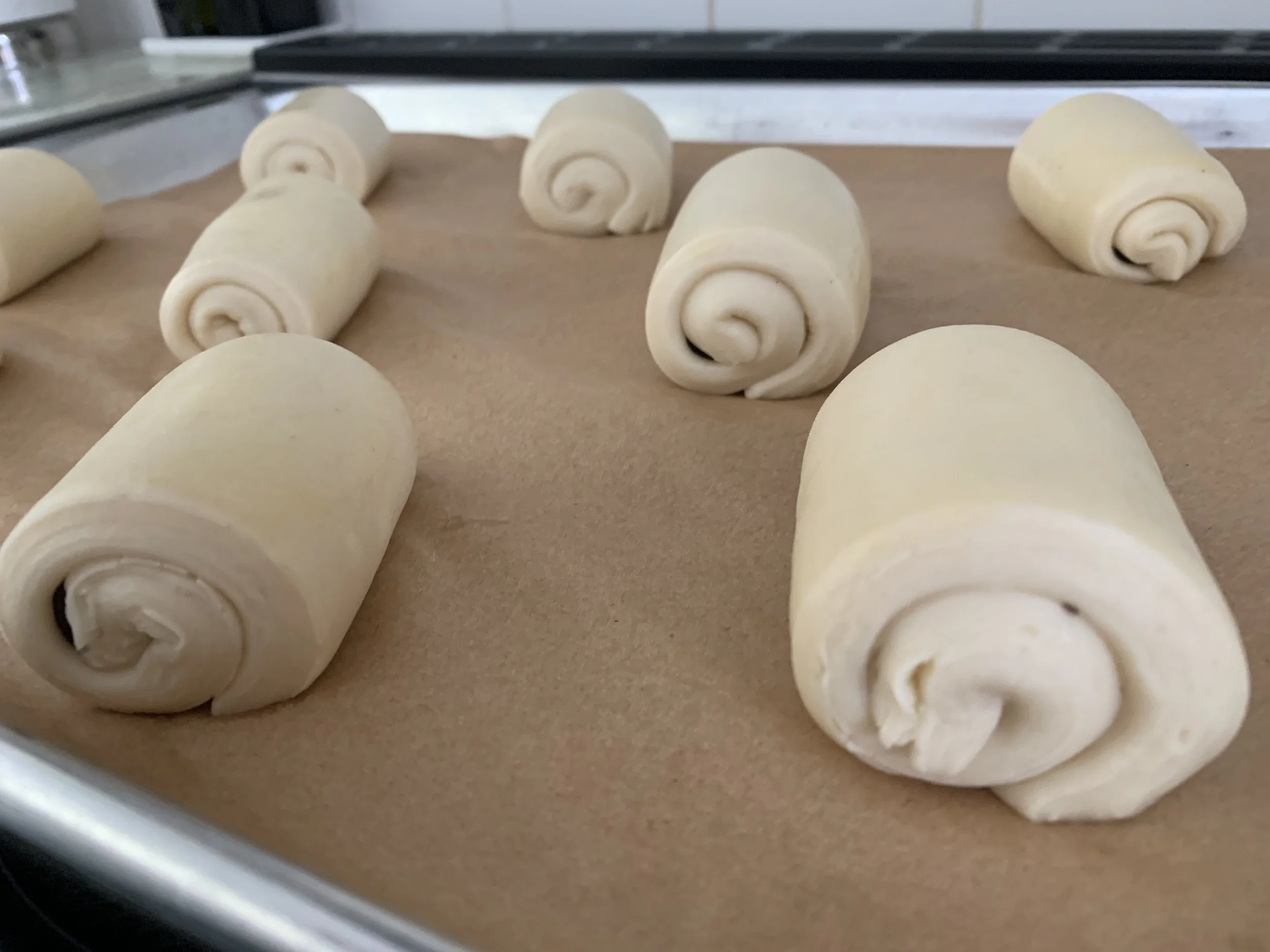
Here they are after a 2.5 hour rise. More pudgy and the laminations more visible. The dough takes on a softer more supple look and when you jiggle the tray a bit, the pastries also jiggle. It takes practice - eventually you just know.
Bake at 400º about 20 minutes. A bit of unfurling but not bad at all. You want the visible edges to be lightly browned (not pale). A sign of a well baked pain au chocolat or croissant is it’s lightness when picked up. If it feels heavy, it’s not done inside.

Okay! So much for that project. It’s pretty wintery here in west Michigan.

Like fluffy cotton balls

Recent snow and more to come
A bit of holiday cheer for you. Until next time - happy baking!
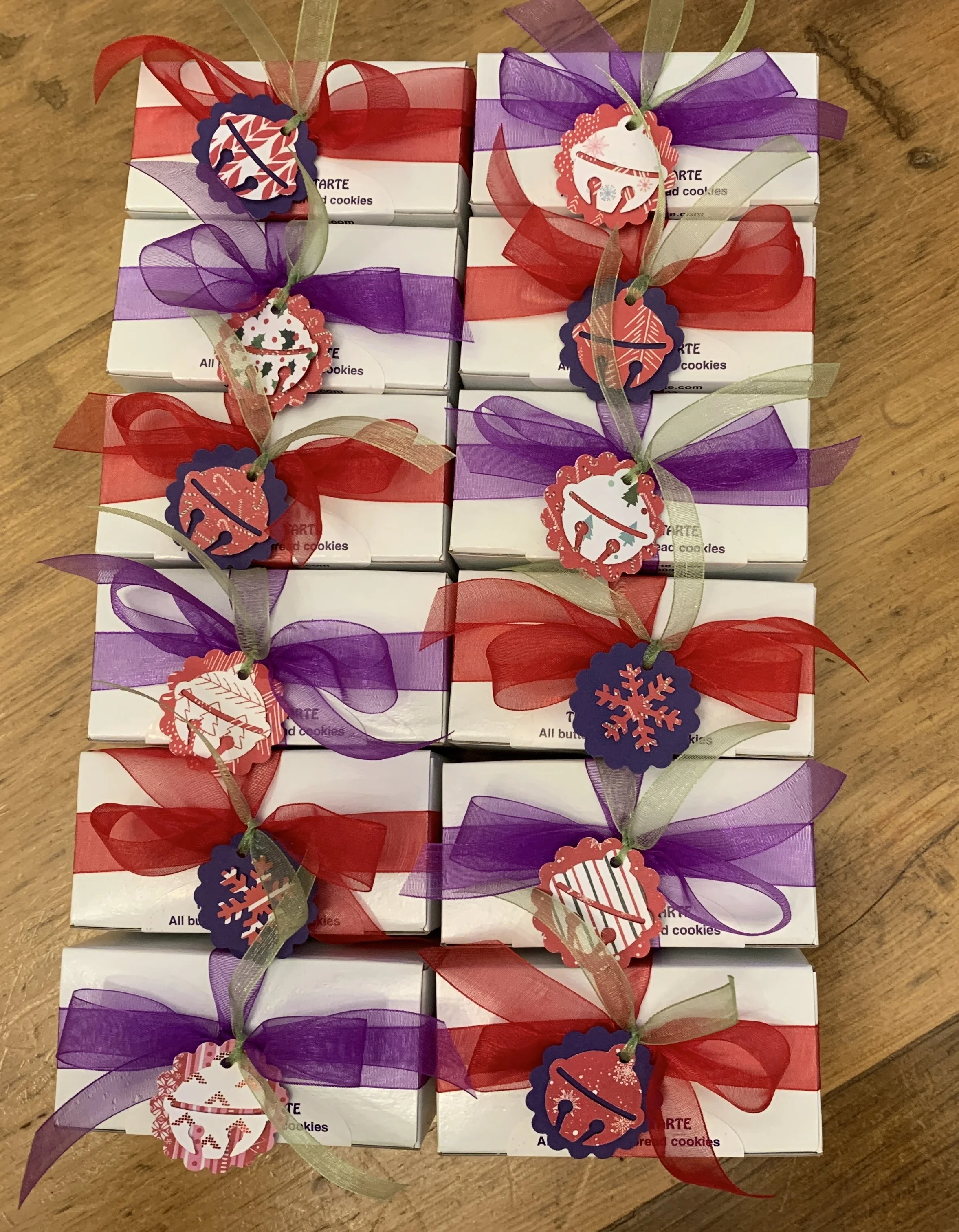
Shortbread gift boxes
