Blueberry hazelnut tarte Bretonne

Petite version

Petite version

I’ve extolled the virtues of sablé Breton on a number of occasions over the years and simply must return to it now and again. The dough is versatile and one that I can make ahead and keep handy in the freezer for a couple of months. As we ease into the late spring and summer seasons, a Breton dough base is perfect either baked with fruit or jam or baked au naturel and topped with fresh fruits and luscious creams. Mmmmm . . . I can just taste them now. Fulton Farmers Market here I come!

Just one of the beauties of this dough is it’s made with egg yolks so . . . . . . When I need to amass egg whites for some of my faves like financier, dacquoise or Swiss meringue buttercream, Breton dough comes to the rescue. Separate the eggs, yolks go into the dough and whites (which can sit in the fridge for a week or so and can also be frozen) are on hand for whatever. I love that.

As an aside, a few other basics that offer me the same egg white saving opportunities are the classic custard sauce/ice cream base crème anglaise or the familiar crème pâtissiére, crème brulée and pots de crème. Of course it’s generally best to make these egg and dairy based goodies within a couple of days of enjoying them, so some planning ahead is important. But they’ll all give you plenty of whites to add to your stash.

I do digress. On to la tarte Bretonne!

The dough comes together easily - one plan ahead note is the butter should be soft. Let it sit out an hour or so, mise out the rest of the ingredients and you’re ready to go. Once mixed you can either wrap in plastic and chill for later or you can shape a rough circle and simply press it into a buttered ring or mold. NOTE: I love baking this dough in silicone flexi-molds which don’t have to be buttered. Yay - one less step!

Here I sub in hazelnut flour for the almond but you can do the same with pretty much any ground nut. Using a buttered 220 mm / 9” tart ring, I guestimated about 360 g of dough to press in the bottom and build up the sides. It’s up to you to experiment a bit, depending on how thin or thick you want your finished dough to be. Thicker than a typical tarte crust is my preference here. You can use even more dough (up it to 400 or 425 g) for a base that’s a delicious, buttery cross between tarte and cake. Yum.

Just for comparison sake, if I’m making a standard tarte with let’s say pâte sucrée, a good rule of thumb is to take the diameter of your ring (e.g. 220 mm), add 30 g to that number and that gives you a decent estimate for the amount of dough for that size ring - 250 g. It works pretty well with inches/ounces too - 9” tart uses about 9 ounces of dough.

998021B8-862D-4609-A6A0-E076FDB324CD.jpeg

Once the dough is pressed into the ring, you can cover and refrigerate it for a few hours or overnight if you’re not quite ready to proceed.

I made a quick hazelnut crumble with 50 g sugar and 75 g whole wheat pastry flour (all purpose is fine too) mixed in a medium bowl; sand in 60 g of cool, cubed butter to coarse crumbs and add 30 g of toasted and chopped hazelnuts. It yields plenty for this type of project and you can freeze any leftover for next time.

My store bought blueberry jam is Bonne Maman, but I also like St. Dalfour, both of which have some great flavor options.

Heat the oven to 350ºF.

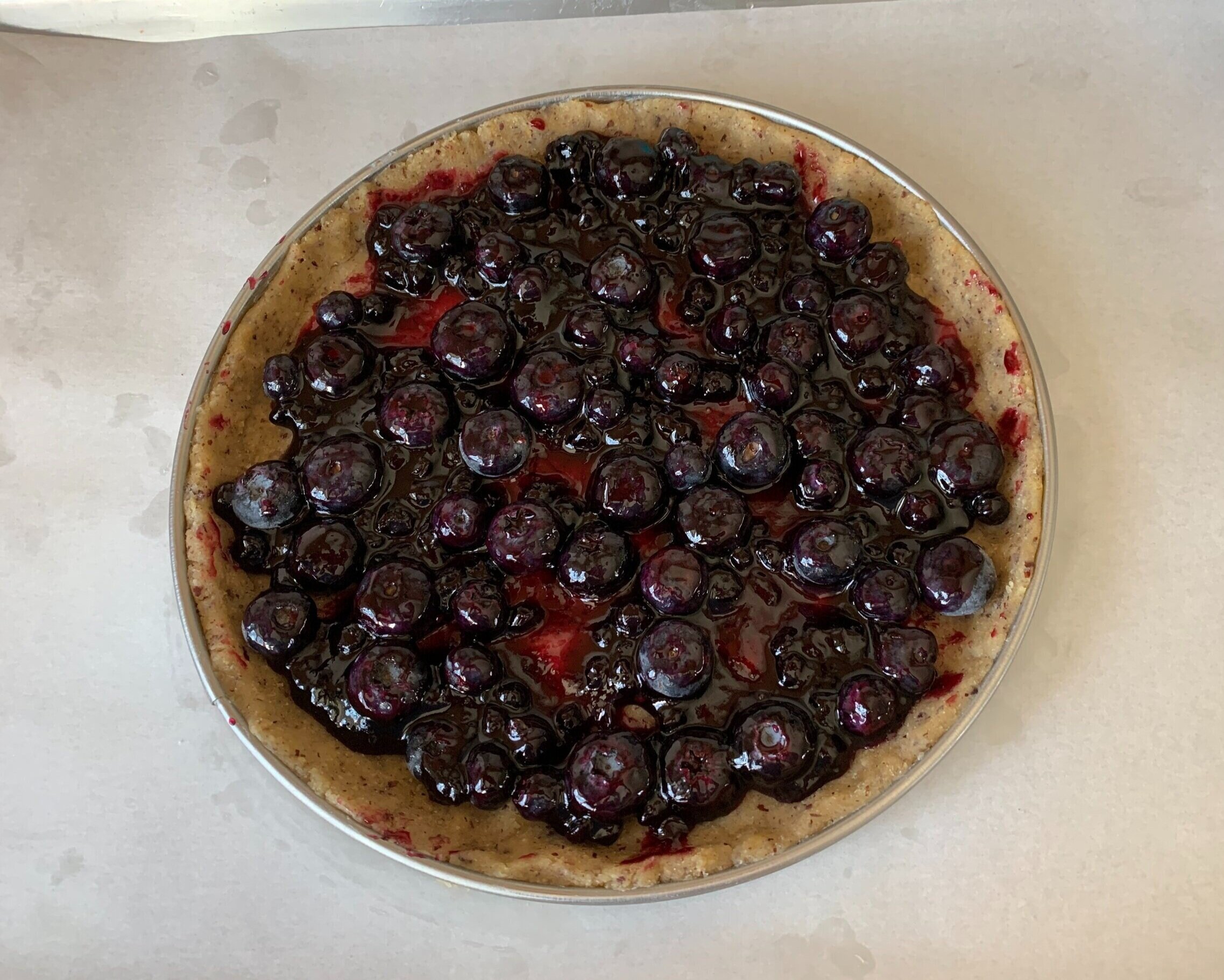
Create a layer of fresh blueberries mixed with a few spoonfuls of jam (eyeball it) over the dough. No fancy fillings here folks!
AD5ACA4A-199B-4E0B-A84D-7EC84214C368.jpg

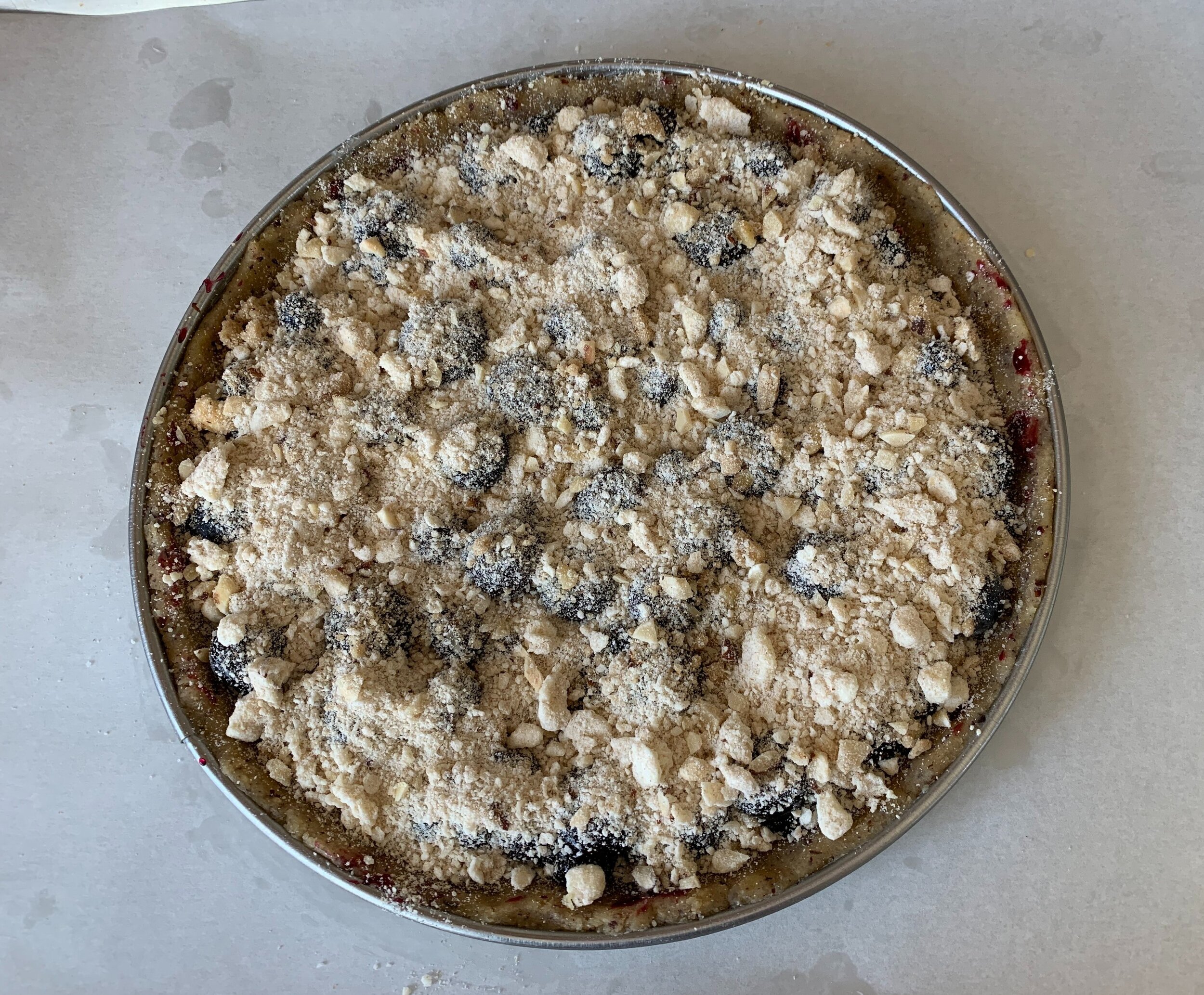
Top it with a decent layer of crumble.
68D8D8D9-ACD6-491E-917F-F435171D62D9.jpg

Bake about 25-30 minutes until the edges and crumble are nicely browned and the jam/berries look bubbly and set. Reduce oven to 325ºF if you feel your edges are browning too quickly. It’s up to you to keep on eye on things!

478CDEBC-5EE7-49F1-8120-45C11B67F05F.jpg

I made this baby for Easter dessert, served with homemade raspberry ice cream. The end result was a nutty, chewy, buttery, jammy, fruity and delicious treat which paired so beautifully with the creamy raspberry.

Truth be told, I prefer small individual desserts to larger, sliceable versions. I made a petite version ahead of time as a test, and it worked so well with a rustic scoop of ice cream right on top. Steve and I enjoyed our taste test while the tartelette was fresh and still a tad warm. Oh my.

E02D9501-C815-468A-97EB-DD1CBA277249.jpg
E5E79400-8188-4574-82DC-AB4326796713.jpeg

There are so many ways to create your own tarte Bretonne. Trust me, you won’t regret it!

Meanwhile spring keeps springing with flowers popping, sightings of turtles on logs, herons flying overhead, red wing blackbirds with their shrill call, garter snakes on the path and spring peepers singing to us all.

Enjoy the season and stay safe.

80881E5D-722B-4B7A-AD7B-25E567586C19.jpeg
7A8FA5C7-2D42-457A-8EBE-FFFF9C231D14.jpeg


Gateau Breton

Perhaps I've mentioned this wonderful goodie in previous posts, if only to speak of its ease of preparation and its delightful taste and texture.  In the wake of making a walnut version recently, I thought it time to focus on Breton dough a bit more.  

Absolument!

Gateau Breton au noix

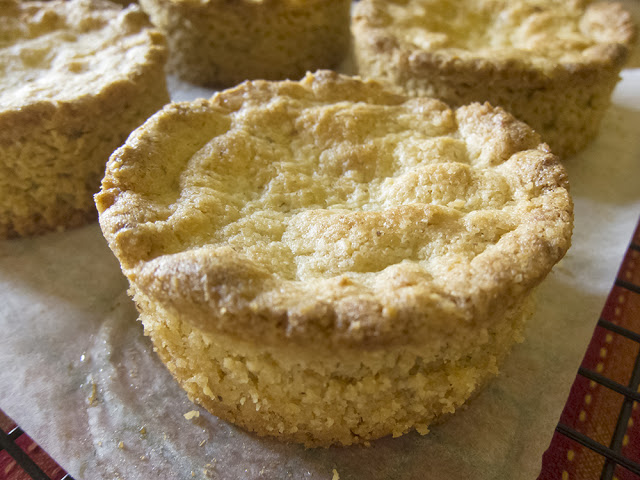
In Brittany a simple gateau Breton is a common offering for petit déjeuner.  It's hard to describe its texture - kind of a cross between cake and shortbread.  When you first take a bite, there is a crispiness to the exterior, but then you reach a dense, almost cake-like interior full of buttery goodness. So deelish.

Breton dough is in the sablé category of dough, but differs from some pâte sablés by changing up the sugar, butter and flour ratios, adding more egg yolks plus baking powder, not a typical ingredient in shortbread and tart doughs.

There are many Breton dough recipes out there.  Most of them utilize equal weights (or close) of sugar and butter in addition to a number of egg yolks, and an amount of flour that is usually about 2 times by weight of that of the sugar or butter.  You can replace some of the flour with a ground nut flour of choice, e.g. almond, pistachio or walnut. Tons of variations exist!

The beauty of Breton dough is its ease of mixing and shaping.  Plus, depending on how thick you bake it, you'll end up with a crispy shortbread (baked thin) or a classic gateau Breton (baked thick).  How can you go wrong with those choices?!

For my walnut version I used Christophe Felder's sablé Breton recipe from his book Les Folles Tartes, replacing the almond flour with toasted, then ground walnuts (toasting nuts before using brings out their flavor!).

I'm a pastry chef who takes lots of notes.  In Felder's book the dough is described thus:  "sablé aéré et léger", and my notation of 2/11/11 was "c'est vrai!" On that date I baked this Breton dough in 60 mm rings and served it with ricotta custard, almond nougatine and a blackberry/raspberry sorbet.  Wow! 

How can something be dense yet airy and light at the same time?  You just have to taste it to understand.

I've since created versions of Breton tarts by topping the dough with almond or pistachio cream and berries or cherries before baking.  You can also add a layer of raspberry or apricot jam (or any flavor you want!) between two layers of dough before baking.  Or bake it plain and top with citrus curd and fresh fruit or coconut cream, candied lime zest and chopped crystallized ginger.  Just use your imagination!

On to the recipe.

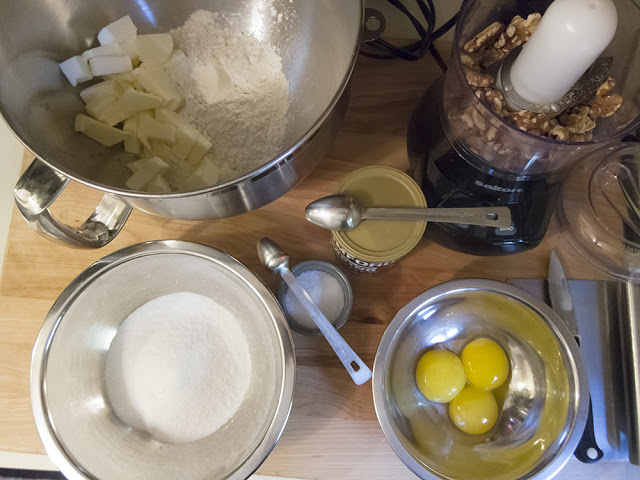
les ingredients

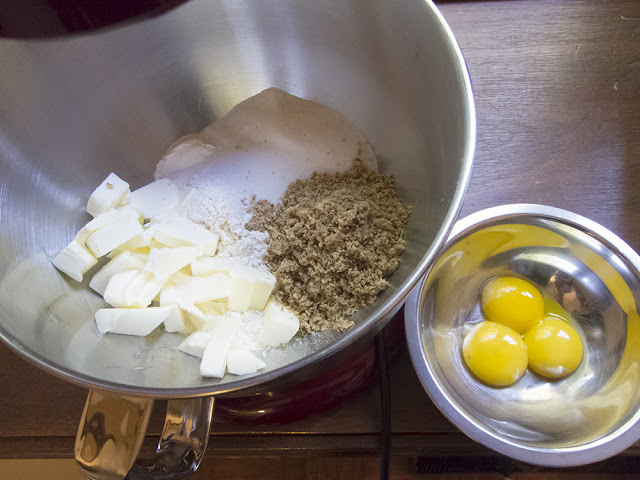
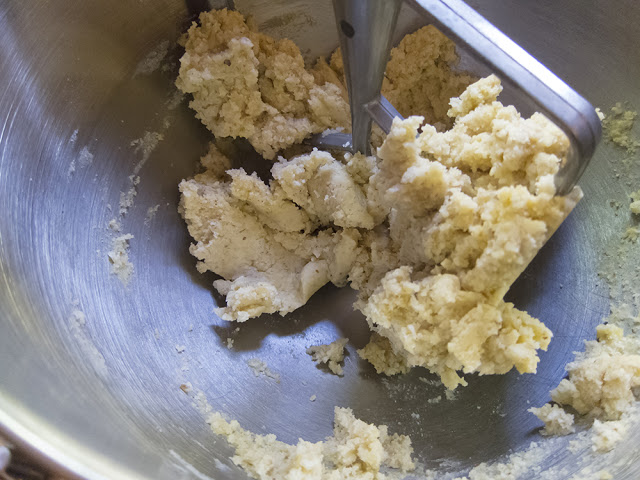
There are different methods of mixing the dough - I use the one I learned at LCB in Paris in which one puts all the ingredients except the yolks in the mixing bowl, brings it to the crumbly stage, then adds the yolks and mixes just until the dough comes together.  So easy.

Here goes.  Place 140 g sugar, 150 g diced/cool butter, 200 g all purpose flour, 70 g ground toasted walnuts (almonds if you're following Felder's recipe), 1 teaspoon baking powder and 1/2 teaspoon salt in the mixing bowl.

NOTE:  Felder calls for 20 g baking powder which is about 2 tablespoons.  I opted to cut it back so as to avoid too heavy of a baking powder taste.

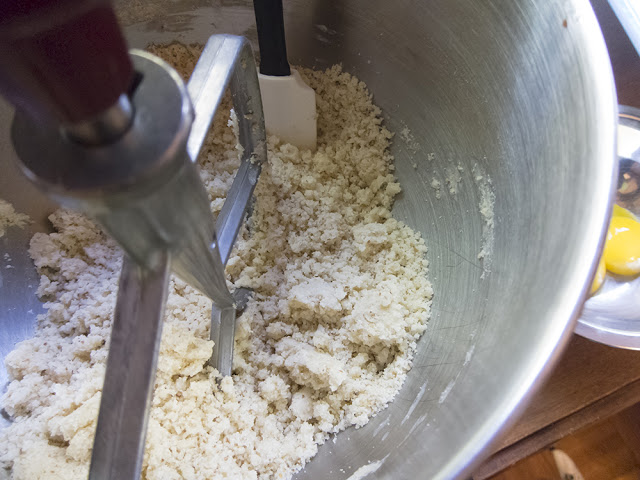
Mix with the paddle on low until coarse crumbs.  Have 3 egg yolks standing by.

ready to start mixing

coarse crumbs

Now add the 3 yolks and blend just until the dough comes together.

c'est fini!

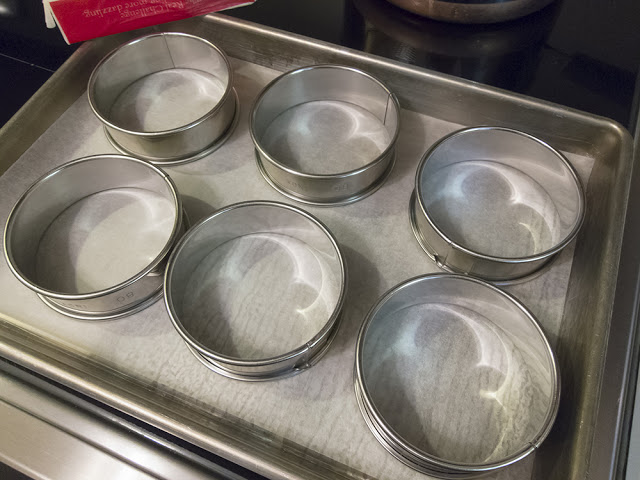
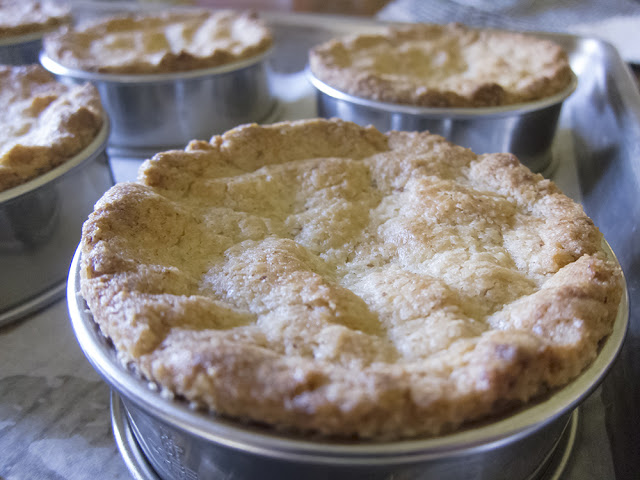
I baked my gateaux Bretons in 80 mm (~3") wide, 2.5 cm (1") tall open rings.  Butter them first and place them on a parchment lined sheet pan.  Heat the oven to 325ºF (I use convection).

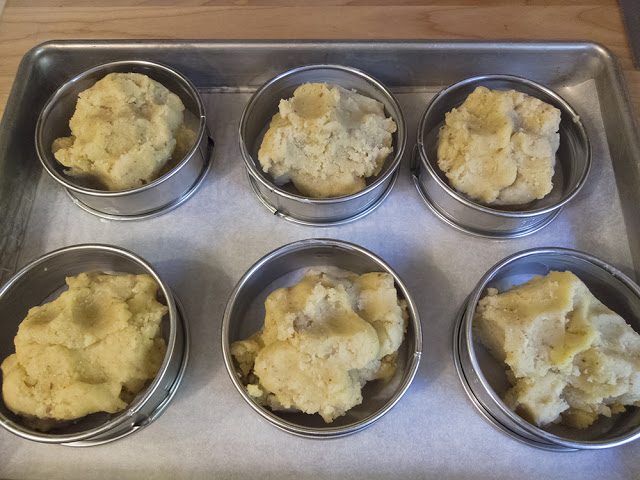
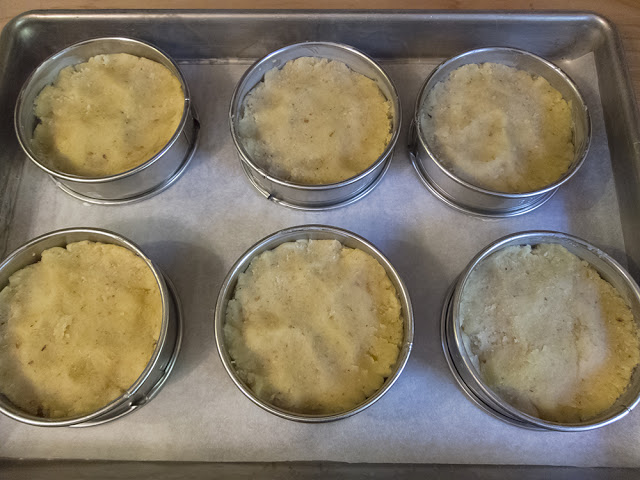
Here's the beauty of Breton dough.  When baking it this way, you don't have to chill it or let it rest first.  You can simply press it into place.  I divided the dough up among 6 rings ( ~105 g per ring) and pressed it down evenly.

all divided up

all pressed down evenly

On a side note, if you're baking this dough as a thin cookie, you should wrap and chill it for a couple of hours first.  Then you can roll it out on a lightly floured surface and cut shapes of choice.

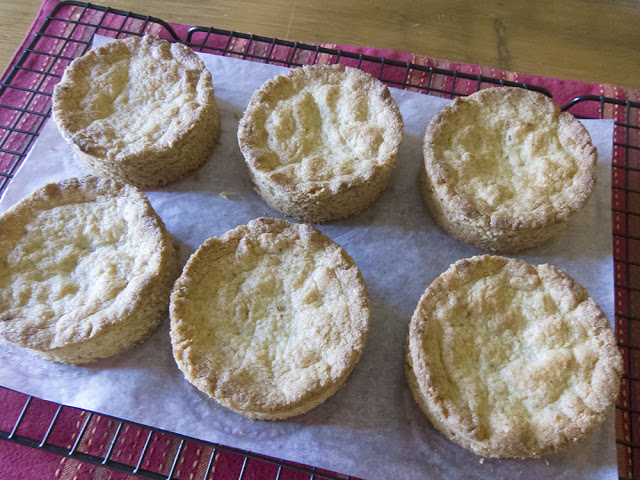
Bake these gateaux for about 20-25 minutes and REMEMBER - always watch what's going on in your oven. You're looking for golden brown deliciousness, and the dough should have risen up along the edges of the rings.

golden brown

looks yummy

Let cool for about 10-15 minutes before gently removing from the rings.

I served the gateaux with warm, sautéed plums prepared as follows.

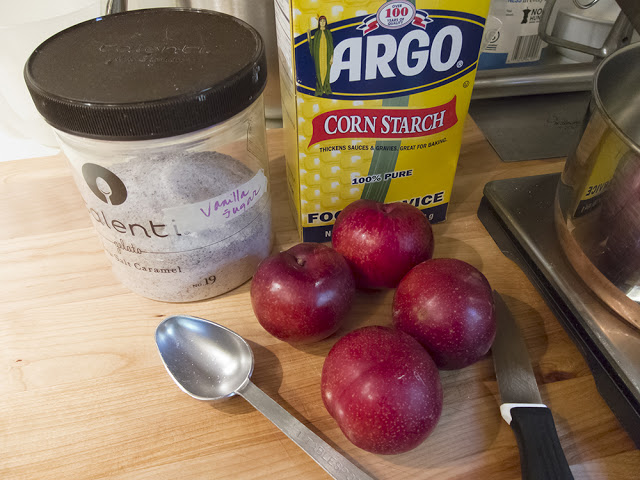
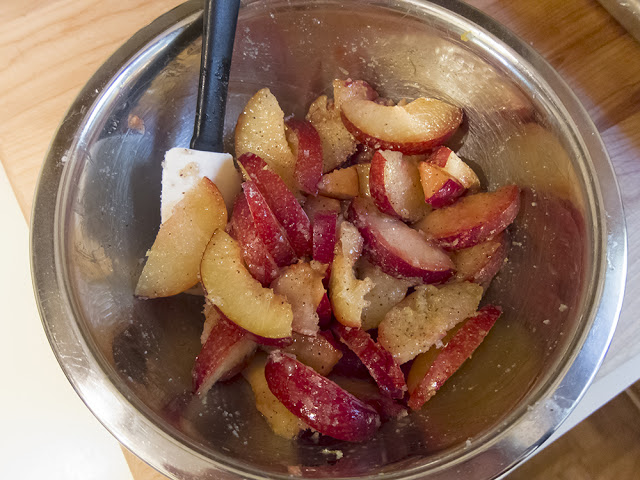
Thinly slice 4 plums, toss them with a bit of lemon zest,  about 1/4 cup of vanilla sugar and  a couple of teaspoons of cornstarch . . . .

all mixed up

then sauté them over med-low heat until the juices are released and start to thicken, 5-10 minutes.

thickened up and ready to go

And the piéce de resistance . . . .

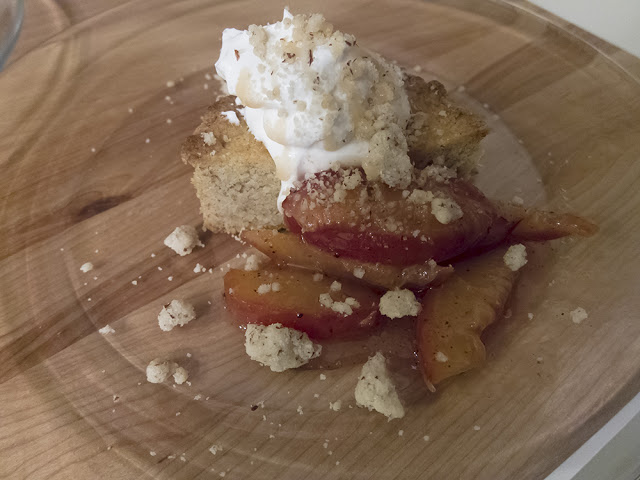
Gateau Breton with sautéed plums, chantilly cream and nut crumble

Très, très délicieux!

Happy autumn tout le monde!!